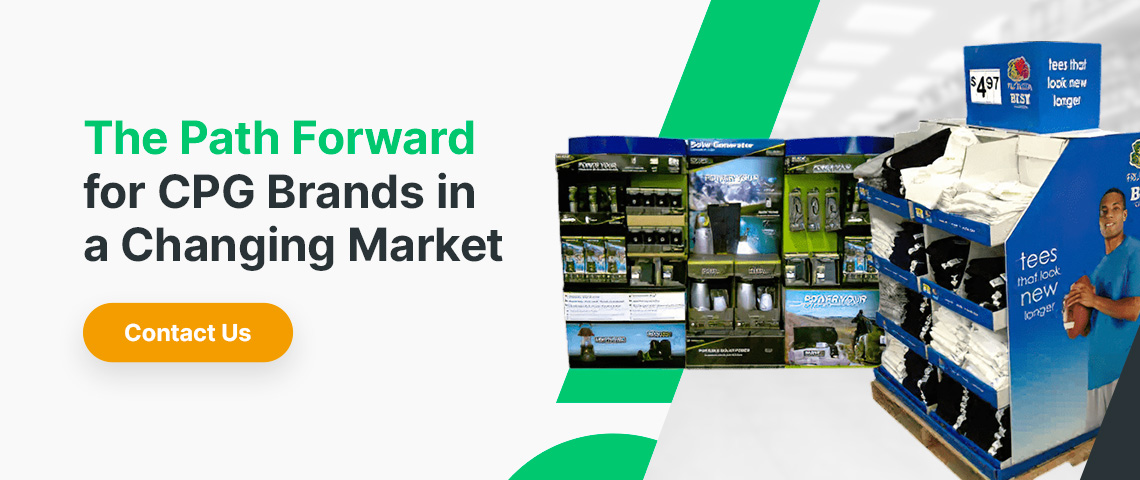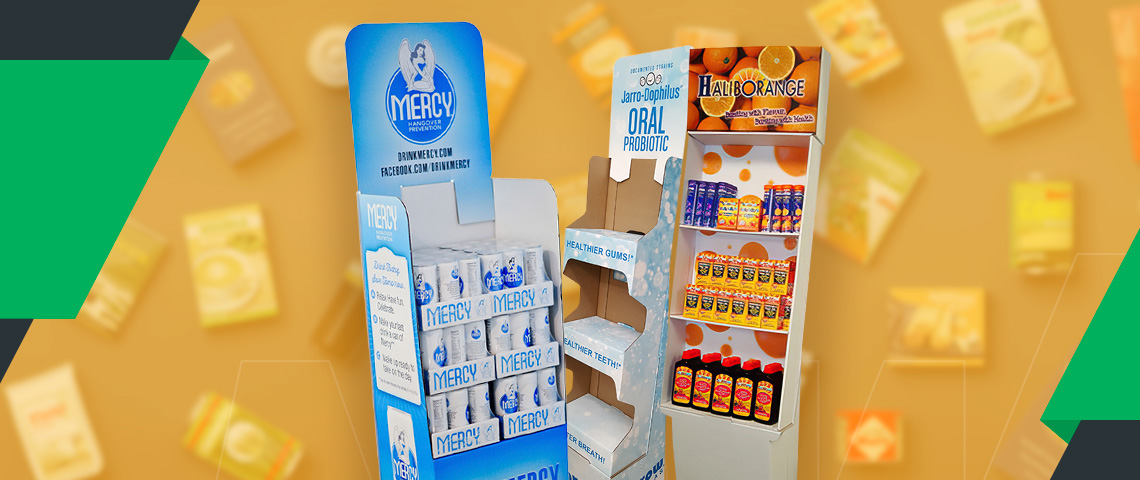

The consumer packaged goods market is highly competitive. Brands must find creative ways to make products stand out among crowded store aisles. You can use intriguing and eye-catching point-of-purchase displays to enhance your product presentation and engage more shoppers.
Retail displays are a powerful tool to differentiate your products from the competition and enhance brand awareness for your business. With a few best practices in mind, you can create the most effective displays for your CPGs.
Use these easy tips and tricks to design displays that spark consumer interest and ultimately boost your in-store sales.
What Is CPG Marketing?
At its core, CPG marketing drives visibility and speed for fast-moving consumer goods like food, beverages, personal care items, pet supplies and household essentials. However, effective CPG marketing extends beyond placement and promotion.
Modern strategies require a multichannel approach, serving multiple stakeholders and meeting constantly evolving consumer expectations. It’s about balancing brand building with data-driven execution to ensure products stand out in crowded aisles and digital feeds.
4 Key CPG Marketing Challenges
Marketing in the CPG space has never been easy, but the pace of change demands constant adaptation in today’s climate.
1. Changing Customer Preferences
Today’s consumers expect more from the brands they buy — more transparency, value and relevance. Trends like sustainability, ingredient simplicity and wellness are now key drivers of purchase decisions across categories. That puts pressure on CPG teams to update products and their positioning and promotion strategies.
2. Highly Competitive Market
New brands are entering the market faster than ever, often backed by nimble teams, bold branding and innovative digital strategies. Meanwhile, traditional players fight to defend shelf space, preserve margins and maintain loyalty in an increasingly uncertain world.
3. Rise of E-Commerce and Digital Marketing
The consumer journey no longer starts or ends in-store. Shoppers are discovering brands on social media, researching ingredients online and navigating between e-commerce and physical retail before making a decision. This shift means in-store marketing must work harder to capture interest and reinforce messaging seen online.
4. Lack of Brand Loyalty
With so many options and the ease of trying something new, loyalty has become harder to earn. This makes every touchpoint with the consumer even more important. Retail displays, promotional campaigns and packaging now serve as essential opportunities to reinforce why your brand deserves a place in their cart.
DTC Strategies Are Becoming Essential for CPGs
DTC selling is now a critical strategy for established CPG companies looking to future-proof their operations, improve margins and deepen customer relationships.
What Is a Direct-To-Consumer Strategy?
A DTC strategy allows your brand to sell directly to end users, typically through an e-commerce platform, bypassing traditional retail or wholesale partners. For CPG companies, this model often involves building a dedicated website, offering fast shipping and using digital marketing to reach and retain customers.
Some DTC brands operate on a subscription model, which can be effective for frequently replenished products, such as razors, nutritional supplements or cleaning supplies. Others use product bundling to offer more value or encourage higher cart sizes.
Whatever the format, the key benefit is control — control over pricing, branding, packaging, fulfillment and customer data.
How Is DTC Disrupting the CPG Industry?
DTC sales have surged over the past decade and are projected to continue growing. These expectations are reshaping the entire CPG ecosystem.
This shift has opened up several key advantages for CPG marketers and product teams:
- Access to real-time customer data: DTC lets brands collect valuable insights directly from buyers. That opens the door for personalized marketing, faster product feedback and more strategic decision-making.
- Greater agility: Selling direct allows brands to test products, pricing and campaigns without lengthy retail approval cycles.
- Higher profit margins: Without wholesalers or retail markups, DTC models can improve profitability, especially for premium or niche products.
- Simplified supply chains: Fewer steps between production and customer translate to fewer risks, less inventory loss and more predictable fulfillment.
How Are Traditional CPG Brands Employing DTC?
Some of the biggest brands in CPG have already embraced the DTC model and are using it to complement, not replace, their retail presence. For example, PepsiCo launched Snacks.com and PantryShop.com to sell curated snack kits and pantry bundles directly to consumers. These platforms let them test preferences and gather CPG insights beyond the traditional retail shelf.
These are just a couple of examples, but both use a hybrid approach that leverages the strength of both retail and DTC to meet customers wherever they are.
How to Launch an Effective DTC Strategy
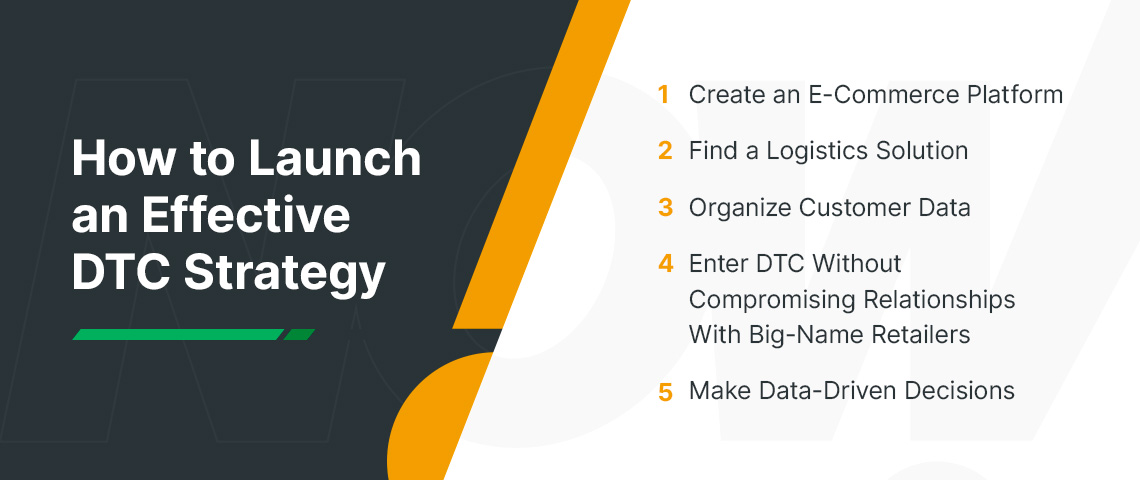
While no two campaigns will look the same, certain tactics are proving to be effective across categories.
1. Create an E-Commerce Platform
Your e-commerce platform should reflect your brand, deliver a seamless shopping experience and support future growth. Consider whether your site should mirror the identity of your retail-facing brand or take a cleaner, more minimalist approach. Whichever direction you choose, prioritize the following:
- Mobile responsiveness
- Fast, intuitive checkout
- Clear product messaging
- Scalable architecture for future growth
2. Find a Logistics Solution
Transitioning to DTC means fulfilling individual orders at scale, an entirely different challenge than shipping bulk quantities to retailers. To meet customer expectations, CPG teams must rethink how they handle inventory, packaging and delivery. Look for a logistics provider specializing in e-commerce solutions and assign team members to manage DTC logistics effectively.
3. Organize Customer Data
To maximize the potential of your DTC strategy, invest in customer data management tools that can help your team:
- Track purchase history, product preference and order frequency.
- Segment your audience for targeted campaigns.
- Align marketing, product development and customer support on shared insights.
4. Enter DTC Without Compromising Relationships With Big-Name Retailers
Leading companies approach DTC not as a replacement for retail, but as a complement to it. One common strategy is to offer exclusive online-only SKUs, customized bundles or subscription options that don’t compete directly with what’s on the shelf. This approach allows you to explore new sales models without creating friction with your most important partners.
5. Make Data-Driven Decisions
Every customer touchpoint in a DTC model is a chance to learn. Brands that leverage this data to inform their decisions gain a measurable advantage. Your data can be strategically applied to:
- Optimize product mix and pricing based on actual user behavior.
- Refine your messaging across campaigns and display materials.
- Align digital and in-store efforts around proven conversion strategies.
In-Store Display Strategies That Support CPG Trends
Creative, well-placed displays allow your brand to stand out in crowded retail spaces and reinforce your omnichannel strategy.
A few key ways to bring it all together include:
- Custom displays: Avoid generic solutions and invest in displays custom-built to match your brand, product specs and retail goals.
- Target audience alignment: Tailor colors, copy and imagery to your customer demographic.
- Consistent branding: Maintain consistency across your display’s typography, logo and brand colors.
- Bold design: Bright, eye-catching visuals and clean layouts grab attention, especially in high-traffic retail aisles.
- Digital campaign integration: Include QR codes, hashtags or visual themes from your online campaigns to create a unified brand story.
- Professional design partnership: Collaborate with a design team with expertise in major retailer specifications and in-house structural design capabilities. This approach helps ensure seamless execution and accelerated time to market.
The Path Forward for CPG Brands in a Changing Market
CPG brands face constant pressure to stay relevant, respond to trends and deliver results in a highly competitive market. From the rise of DTC strategies to shifting consumer behaviors and tighter retail spaces, the challenges are real, but so are the opportunities.
A strong in-store presence remains one of the most powerful ways to connect with shoppers, support omnichannel strategies and convert interest into loyalty.
If your brand wants to improve its retail appearance, Creative Displays Now can help. With over 60 years in the corrugated cardboard displays and packaging business, our custom solutions bring speed, quality and deep industry expertise to every project. We also offer everything from design to distribution. Contact us today to start building custom retail display solutions that fit your brand, goals and retail environment.