
A product launch is on the horizon, and you already have retail display ideas that will drive visibility and sales in stores, but the options, specifications and production steps feel overwhelming. Don’t worry — your marketing team can move forward when you understand which display format fits the product and retail environment, what to expect during production and the critical information to gather before requesting a quote.
Do Custom Retail Displays Fit Your Product?
Temporary corrugated cardboard displays are fully customizable solutions designed to last for months in high-traffic retail environments. The decision to deploy them depends on your product’s size and weight, where it will be available and how you expect shoppers to interact with it.
Since the display format can make or break your visibility, it helps to familiarize yourself with what’s available before exploring new retail or POP display ideas for a campaign or seasonal promotion.
Floor and Endcap Displays
Research shows that 86% of consumers recalled seeing floor stands and endcap displays, and front-endcap displays have the most significant impact on category purchase incidence of all display types. These displays each serve a different purpose in stores.
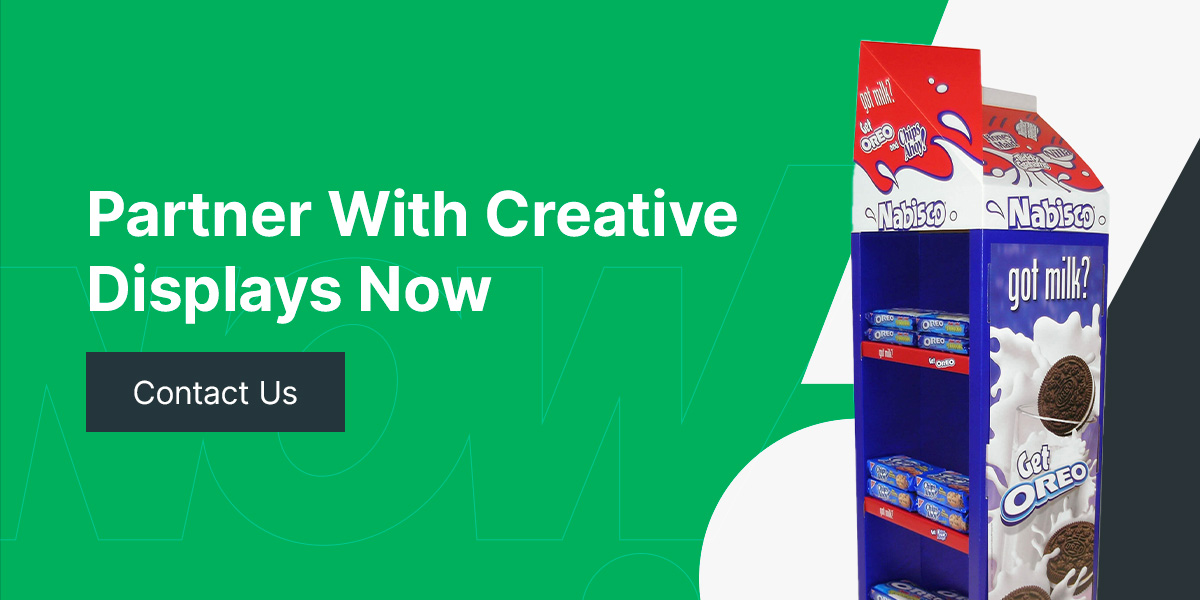
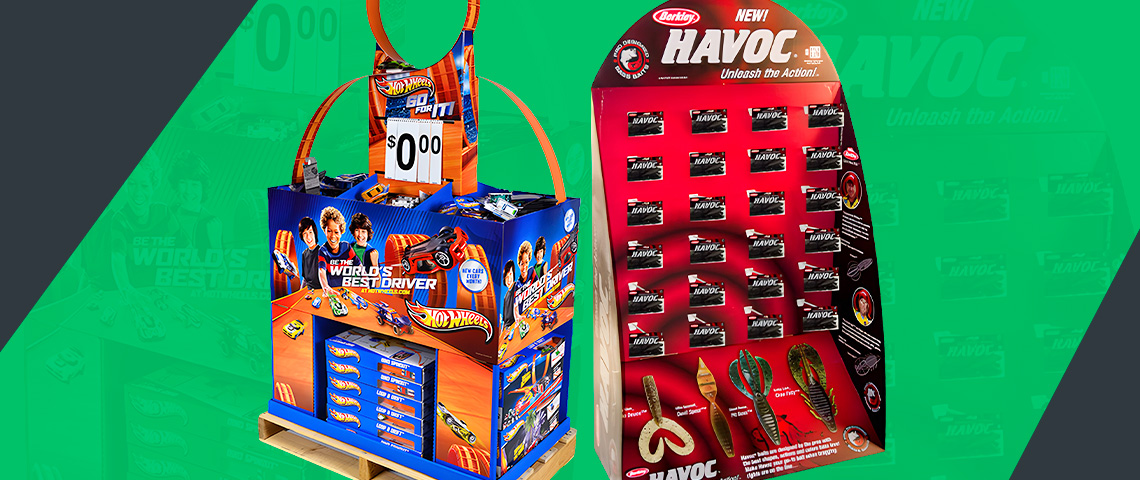
- Floor displays are freestanding units placed in high-traffic areas throughout a store. They work well for heavier or bulkier products and can use single-wall or double-wall corrugated construction, depending on load requirements. With substantial branding space, they can showcase multiple SKUs or a larger quantity of a single product.
- Endcap displays sit at the ends of aisles, where foot traffic is high and shoppers often slow down or stop. They are especially effective for new SKUs and seasonal promotions. Major retailers often have specific requirements for dimensions and materials — confirm these before committing.
Counter Displays
Compact and often positioned near checkout areas, counter displays are perfect for encouraging impulse buys of smaller, lightweight products such as candy, health supplements, beauty items or accessories. E-flute corrugated material works particularly well here because it is thin enough to support high-quality full-color printing while maintaining the structural integrity needed to hold the product securely.
Placement near the point of purchase reaches shoppers at a critical decision point, efficiently using limited space and creating opportunities for last-minute purchases.
Power Wing Displays
Power wing displays, also called sidekick displays, attach to shelving or endcaps rather than occupying dedicated aisle space. They provide secondary exposure for accessories, promotional items or new SKUs entering the market. Because they do not require a dedicated footprint, power wings offer an efficient solution in limited space or when a brand wants to increase visibility without committing to a full stand-alone unit.
The modular design allows brands to position products in multiple locations throughout the store, and the lower cost compared to freestanding units makes them an accessible entry point for smaller campaigns or regional trials.
What Goes Into Making a Custom Retail Display?
A series of coordinated stages ensures your final display performs as you intended in the retail environment. The production process can integrate design, prototyping, printing, manufacturing and distribution, sometimes under one roof. This approach leads to speed, consistency and quality control throughout retail display production.
Structural Design
Structural design is where the display takes shape. During this phase, your display manufacturer will engineer each unit around the product’s weight, retail channel, shipping requirements and assembly method. Every corrugated display design should also account for retailer specifications, including footprint, height and load capacity.
At this stage, retail display design considers the entire life cycle — packing, shipping, assembly and recycling. Careful planning identifies potential structural, logistical or assembly challenges before the display moves into production.
Branded Graphics and Print Options
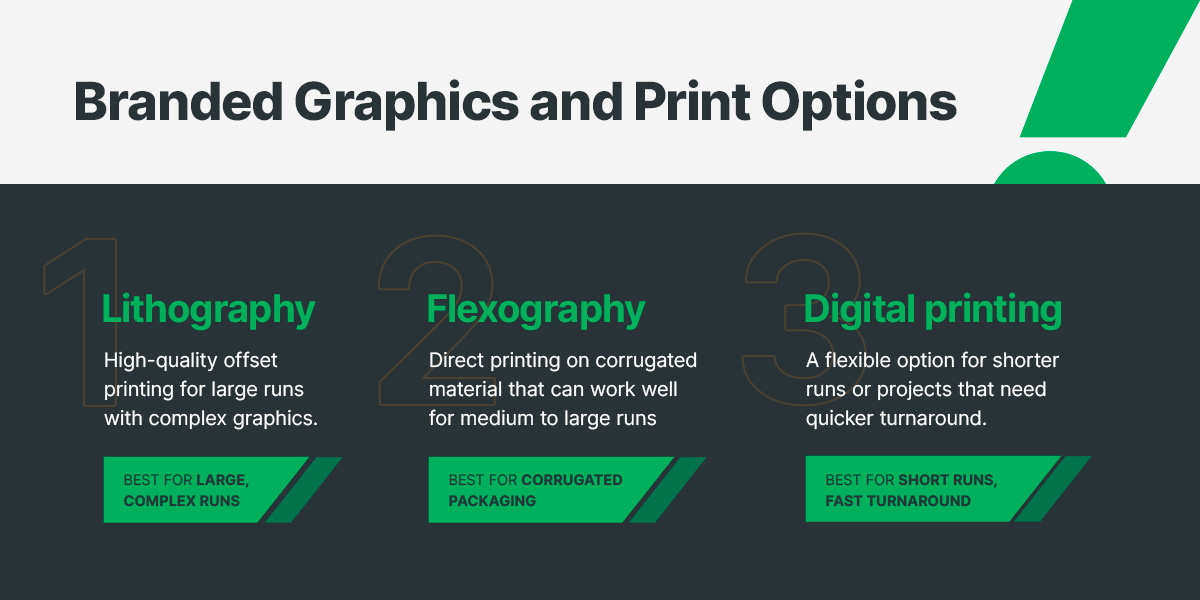

Brands that choose full-color printing create visual consistency between their packaging and point-of-purchase materials. A printer can apply graphics using one of several techniques.
- Lithography: High-quality offset printing for large runs with complex graphics
- Flexography: Direct printing on corrugated material that can work well for medium to large runs
- Digital printing: A flexible option for shorter runs or projects with quicker turnaround needs
The chosen print method typically depends on the corrugated substrate, run size, artwork complexity and timeline. Compelling graphics can connect retail and POP display designs to your brand standard and make the unit more noticeable in a crowded retail environment.
Prototyping
A structural prototype verifies the display’s size, strength and construction before production begins. This unprinted sample lets you evaluate how well the unit will hold your products, how easy it will be to assemble and whether you need to adjust anything before approving the project to move into full production.
Printed prototypes may also be available for teams that want to review how their artwork appears on the display. These samples typically involve an additional charge, so confirm the cost before requesting one. Catching structural or artwork-related issues during the prototyping stage can reduce delays and avoid production changes later.
Production and Distribution
Your project will move into production once you sign off on the prototype. Depending on the program, this stage may include manufacturing, assembly, pack-out and distribution to retail locations or fulfillment partners. Concrete timelines are vital here, especially for seasonal campaigns, product launches or other retail programs tied to specific in-store dates.
Corrugated cardboard made with recycled content is a practical material choice for CPG brands with sustainability goals. In 2020, the U.S. corrugated industry recycled 90.5% of old corrugated containers — an industry-leading rate that aligns with retailer expectations and consumer values.
What to Have Ready Before You Request a Quote
The more information you gather before reaching out to a display manufacturer, the faster the process will move and the more accurate the initial estimate will be. A retail display brief is an excellent way to confirm these details:
- Product dimensions and weight per SKU
- Number of units the display needs to hold
- Known specifications of the retailer that will carry your display
- Campaign context, such as new SKU introduction, seasonal promotion or ongoing program
- Timeline for when displays need to arrive in stores
- Estimated quantity, including the number of displays or store locations
- Brand guidelines, including logo files, color codes and existing packaging artwork
Partner With Creative Displays Now
Creative Displays Now guides CPG brands through every stage of custom display development, from selecting the format and engineering the structure to prototyping, production and nationwide distribution. With over 60 years of experience in the display and packaging business, ISO 9001:2015 certification and a better-than-99% on-time delivery rate, our team routinely supports new SKU introductions, seasonal campaigns and ongoing retail initiatives.
Whether this is your first display project or you are scaling an existing initiative, request a custom display estimate to get started.