



Bringing a new product to market can be a make-or-break business decision. For ambitious, resourceful emerging brands, those precious first weeks on the shelf often determine whether a product will become a mainstay or fade into obscurity. Despite bold vision and grit, most startups and challenger brands run into the same paradox — high visibility is critical to drive sales, but the costs of permanent fixtures or hefty slotting fees can be prohibitive.
However, there is a way to maximize impact and minimize financial risk — corrugated temporary displays. These flexible, cost-effective structures offer premium shelf visibility without the cost of custom, permanent retail installations. In the right hands, these displays can fuel trials, sustain velocity and give new brands the impact of larger competitors at a fraction of the investment.
Here, you can learn more about selecting the right display, how to control costs and tips for executing a successful retail rollout.
Why Launch Displays Matter More Than You Think
A great display can make all the difference in ensuring your product captures attention and achieves critical performance during its earliest days on the shelf. Three key factors underscore just how vital temporary displays are during a new product launch:
- Velocity: Retailers judge new items primarily by “sales per point of distribution” (SPPD), especially in the critical first 8-12 weeks. Launch displays can accelerate this metric by boosting visibility and driving immediate trial. Without a rapid sales lift, even the most promising products face early discontinuation.
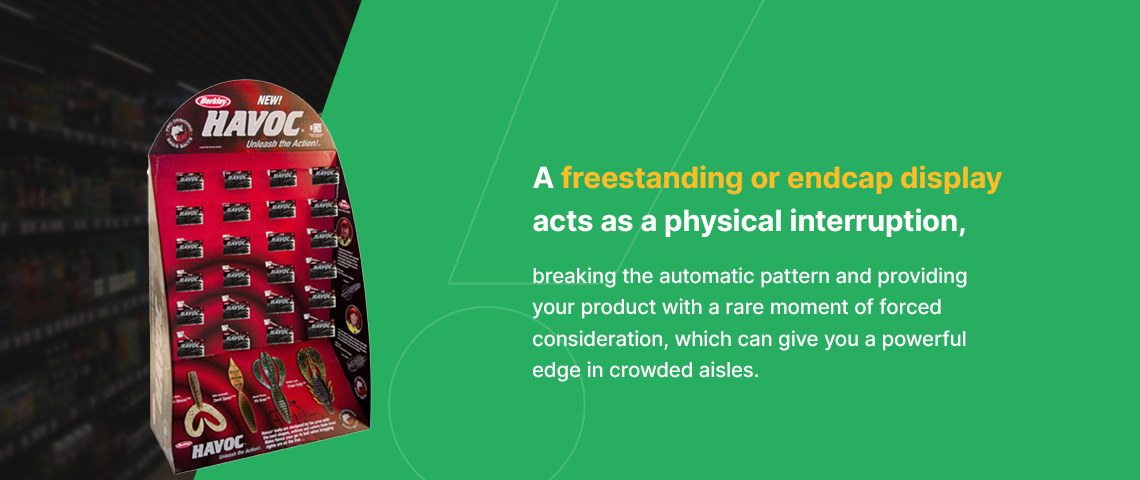
- Disrupting the “autopilot”: Most shoppers move through stores on habitual routes, largely ignoring unfamiliar items parked silently on the shelf. A freestanding or endcap display acts as a physical interruption, breaking the automatic pattern and providing your product with a rare moment of forced consideration, which can give you a powerful edge in crowded aisles.
- Capturing high-frequency impressions: According to the marketing “Rule of 7,” buyers need multiple exposures to a brand before making a purchase. Strategically placed displays generate repeat impressions right where a customer makes a purchase decision, dramatically increasing the likelihood that your product will move from “new” to “in the cart.”
These combined advantages make launch displays an essential tool for emerging brands looking to convert opportunity into ongoing distribution and long-term success.
The Launch Math: Visibility to Trial to Velocity
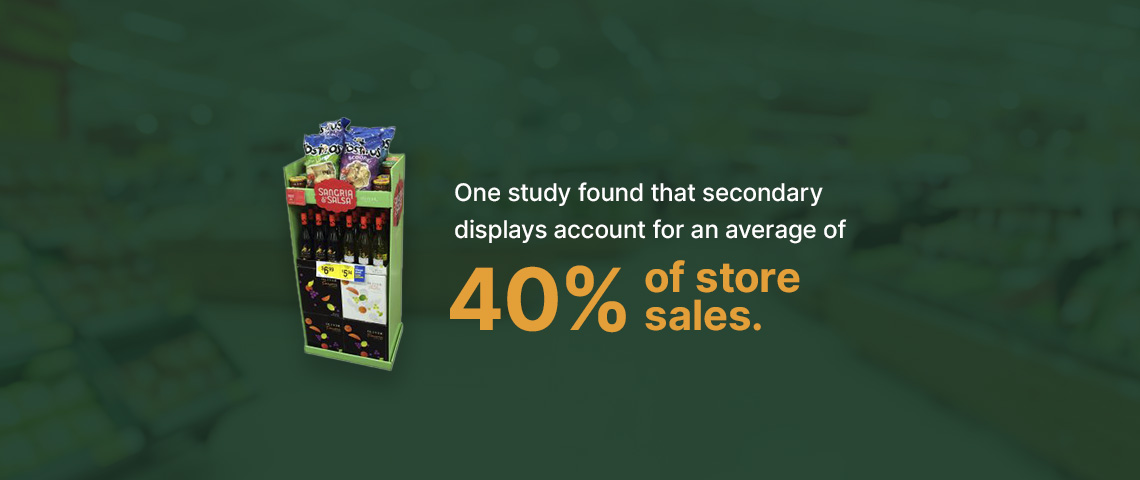
Understanding the math behind display impact strengthens the case for POP investments. Data consistently shows that secondary placements, such as endcaps or power wings, can drive large increases in sales compared to shelf-only positioning. One study found that secondary displays account for an average of 40% of store sales. These increases directly translate to more products being added to shopper baskets.
Perhaps even more importantly, displays serve as essential trial drivers, which is the first step to fostering brand loyalty. New products need to overcome shopper hesitation and skepticism. Proper positioning on a dedicated display allows a product to appear important, trusted and worth trying. This removes much of the perceived risk for customers and gives brands a shortcut to consumer trial.
What Retailers Want From a Launch
Of course, retailers’ expectations shape which displays get deployed. For buyers and store teams already stretched thin, labor efficiencies are paramount. Displays that arrive pre-packed and require no assembly are overwhelmingly preferred, as they minimize the burden on understaffed store associates and speed time to the floor.
Another make-or-break factor is footprint efficiency. Retailers are constantly balancing limited space against return on investment. They often favor compact, high-turn displays that deliver strong “sales per square foot.” The less room a display takes, while still moving significant volume, the easier it is to win retailer approval and secure prime placement.
By understanding and planning for these realities, brands can position themselves to launch successfully and thrive in one of the most challenging and rewarding moments in the product life cycle.
Set a Budget-Friendly Display Strategy
Launching with impact requires a smart plan. Crafting a display strategy means thinking holistically and balancing creativity with cost control. By approaching every decision with clarity and efficiency, brands can optimize resources, reduce waste and set the stage for maximum in-store success from day one:
- Objective-first planning: Begin by clarifying your true goal. Consider whether you want to increase brand awareness, encourage as many new customers to try the product as possible, or promote cross-merchandising with something complementary. This focus will dictate the right display type, size and message, helping you avoid costly or unfocused builds that don’t serve a real strategy.
- Duration matching: Don’t overpay for more durability than you need. If the launch campaign will last four weeks, there’s little sense investing in display materials that are engineered to last for six months or more. Align material spend with your retail stop time.
- Total cost of ownership: Many brands make the mistake of only considering the unit cost of a display. Factor in every phase, including one-time creative design work, per-unit material and labor, the cost of filling displays with product, and freight to distribution centers and stores. Keep in mind that unexpected expenses most often arise from assembly, freight or mismatched design-to-distribution plans rather than material cost alone. A realistic budget model helps avoid shock and overspend later.
Choose One Objective and One Stock-Keeping Unit (SKU)
Resist the urge to release multiple flavors or pack sizes at one time. Giving shoppers too many choices can result in them stalling and buying none. Additionally, displays that attempt to merchandise multiple units introduce complexity, often increasing pack-out time, fulfillment costs and error risks. Simpler displays are faster, cleaner and less expensive. Choose one SKU to drive the highest conversions and control costs at every step.
Plan for the Real Costs of Your Display
It’s easy to underestimate the true cost of a launch display. Beyond material price, you must factor in freight, assembly labor and co-packing fees. These hidden expenses can quickly add up, so it’s important to prepare for them. Budget for the labor required to assemble the display and fill it with product before it ever leaves the warehouse. Optimizing display dimensions for shipping efficiency and simplifying assembly can protect your budget and prevent unwelcome surprises during rollout.
Budget-Friendly Product Launch Displays That Perform
Choosing the right “chassis” is the single biggest factor in cost control. Standardized formats from display manufacturers’ existing libraries avoid expensive custom tooling and optimize for production efficiency. Consider these displays:
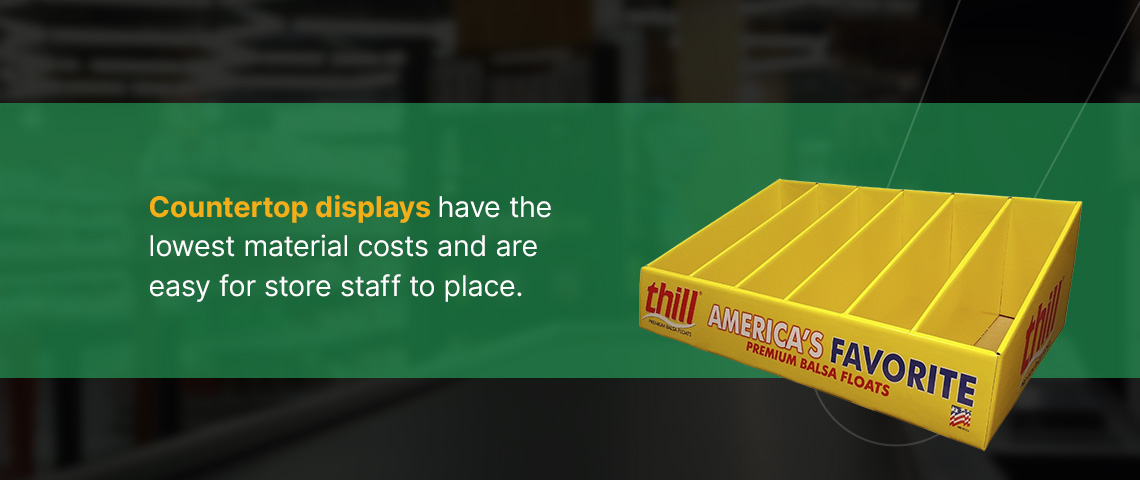
- Countertop displays: Countertop displays have the lowest material costs and are easy for store staff to place. These displays are best for small, impulse-driven items, like snacks, beauty products and supplements. Place countertop displays at checkout or service counters to maximize impact.
- Sidekicks and power wings: This merchandising hangs off of existing shelving, making it ideal for cross-selling. For example, hanging chips next to salsa or marshmallows next to graham crackers capitalizes on the traffic of high-volume categories without requiring floor space.
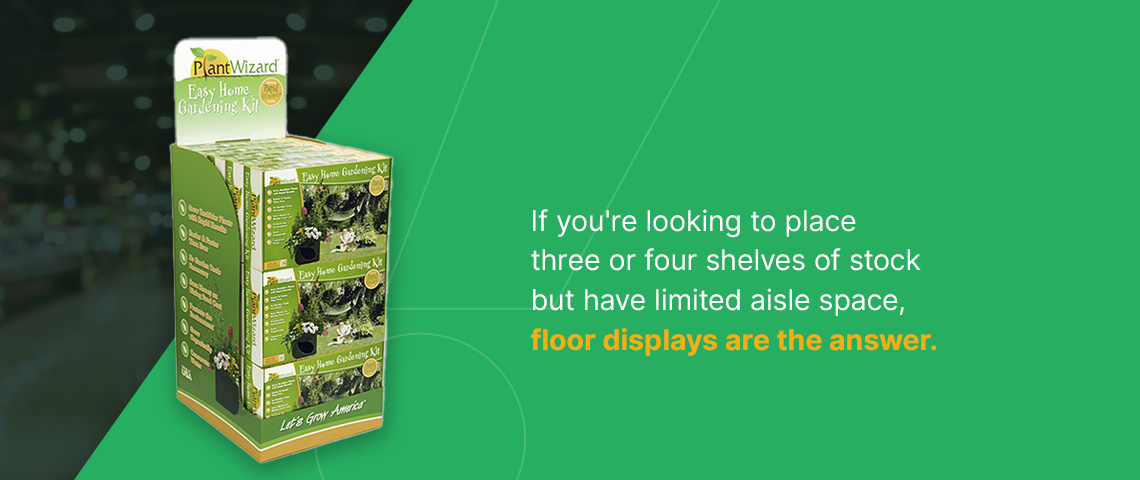
- Small-footprint floor displays: Heavier items are ideal on small-footprint floor displays. If you’re looking to place three or four shelves of stock but have limited aisle space, floor displays are the answer. These displays also offer the largest printable surface area for brand messaging relative to cost.
- Dump bins: Dump bins are ideal for high-volume, durable or irregularly shaped items that don’t require neat stacking, such as grab-and-go discount items. These bins often signal “value” or “promotion” to shoppers, subconsciously encouraging bulk buying.
Corrugated Product Launch POP Display: High Impact, Low Investment
Corrugated board is uniquely agile. It supports vivid, full-color digital printing, allowing you to achieve short-run, high-impact graphics without the expensive setup or print plates required for litho lamination. This technology is the backbone of every agile brand’s launch strategy.
Corrugated board also offers a solution for modern buyers and retailers looking to enhance sustainability. These displays are recyclable, which aligns with many retailers’ environmental scorecards. Building this into your pitch can tip the scales in favor of your display.
Why Choose Corrugated Displays for Launch Windows?
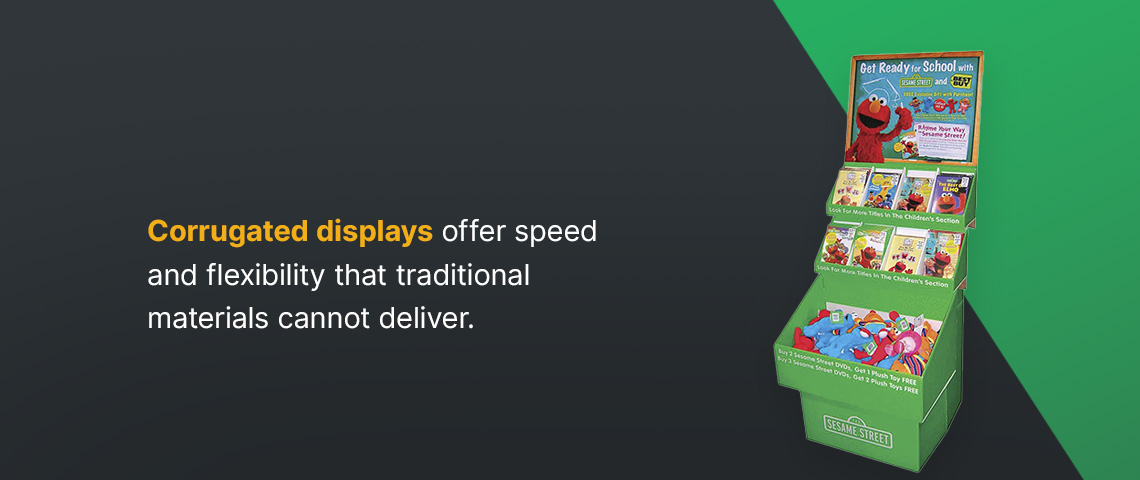
When launching a new product, timing is everything. In a launch window where agility can be the difference between success and missed potential, corrugated solutions deliver exactly when and where it matters most. Corrugated displays offer speed and flexibility that traditional materials cannot deliver. This speed helps brands capitalize quickly on new retail opportunities.
Digital production lines can turn new designs into high-quality units in just a matter of weeks, or sometimes even days. This process accelerates speed to market, a major win for retailers. Additionally, with digital cutting and finishing tables, you can test as few as 500 units with zero investment in expensive, custom steel dies.
When Corrugated Might Be the Wrong Choice
Despite the many benefits of corrugated board, some applications may require a different solution. For example, outdoor, fridge or garden center programs may need plastic, wood or metal displays to ensure product integrity.
Additionally, corrugated board is engineered for about four to eight weeks. This means programs scheduled for half a year or more are more economical over time when leveraging plastic, wood or heavier materials.
Design Tips That Make a Cheap Display Look Premium
A well-designed temporary display can disguise inexpensive materials as premium. Conversely, a poorly designed display can cheapen even the most luxurious item. To maximize impact in-store, every element must work together to disguise simplicity as sophistication.
On top of navigating perceived value, you need to combat the fast-paced nature of the retail landscape. Modern displays must answer two questions within seconds from several feet away — “What is it?” and “Why do I need it?” If you can’t convey these messages within seconds and from a distance, even the boldest design is destined to be overlooked.
Understanding Launch Messaging Hierarchy
Shoppers encounter thousands of products during every visit, so clear, effective messaging is vital for a display to succeed. The most effective displays deploy visual signals that instantly say “new,” whether through striking graphics, disruptive colors or unmistakable callouts. This immediate cue positions your product as fresh and attention-worthy.
However, novelty alone isn’t enough. Your core message should quickly communicate the primary benefit, not just an ingredient or feature. For example, rather than focusing on what’s inside, such as a nightly vitamin that “Contains Melatonin,” spotlight what your product helps the shopper achieve, like “Better Sleep.” This approach helps your display move beyond awareness and actively motivate purchase.
Adhering to Retail Readability Rules
Once you’ve established the right hierarchy of messaging, execution becomes everything. Visual clarity is essential. If shoppers cannot read your text from several feet away, you risk missing your target audience entirely. Prioritize large, high-contrast fonts, steering clear of low-visibility combinations, such as white text on pale backgrounds.
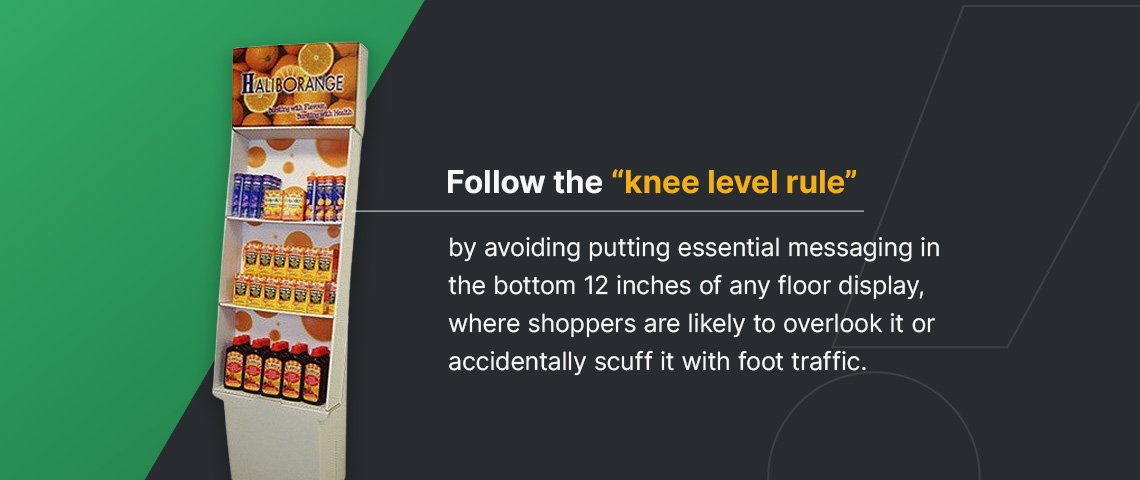
Placement matters, too. Follow the “knee level rule” by avoiding putting essential messaging in the bottom 12 inches of any floor display, where shoppers are likely to overlook it or accidentally scuff it with foot traffic. By optimizing both what you say and how and where you say it, even a budget-friendly display can command the respect and attention of a far pricier installation.
Cost-Effective New Product Displays: Production and Sourcing Hacks
Efficiency and smart planning during the production and sourcing phase are essential for brands navigating tight launch budgets. By thinking like a manufacturer and focusing on simplification, you can dramatically reduce costs without sacrificing impact.
One of the most powerful cost-saving tactics is standardization. Many display manufacturers offer a catalog of tried-and-true display structures that they can produce quickly and at scale. Choosing a design from this existing library eliminates the need for custom dies, extra CAD work or the uncertainty that comes from creating something entirely new. This route shortens lead times and eliminates expensive tooling fees, allowing brands to reinvest resources elsewhere.
In addition to structural choices, material efficiency can make a major difference. By designing displays to maximize the number of units that fit on a standard sheet, you can minimize waste, streamline your supply chain and ultimately decrease material and production costs. Partnering closely with your manufacturer during this process ensures you’re optimizing the layout to achieve the best possible yield.
Using Standard Sizes and Modular Components
Once you’ve embraced the power of standardization and material efficiency, the next step is to maximize your display’s adaptability and retailer acceptance. One proven approach is to build reusability into your design. For instance, you can create a universal base tray that remains constant across campaigns while simply swapping out the header for each new promotion or season. This flexibility lets brands refresh their visual presence quickly and affordably, without the cost of producing an entirely new display from scratch.
At the same time, compliance with retail requirements is key. Standard display footprints, like the common 14″x48″ power wing, are designed to fit most retail environments. By sticking with these industry norms, you ensure your displays will be easy for retailers to place, increasing the likelihood of broad acceptance and consistent execution across multiple store formats.
Simplifying the Build
All of these strategies come together in the final, but equally critical, phase — making the display as simple as possible to assemble and deploy. Every additional part, fold or tab on a display adds labor time and cost during the pack-out process. Streamlining the structure can minimize assembly expenses and make it more likely that your displays will be properly built on the sales floor.
Simple, geometric forms are often faster to put together and stronger and less susceptible to shipping damage compared to more intricate, artistic designs. By focusing on both assembly efficiency and structural integrity, you safeguard your investment and ensure your displays look great from warehouse to store shelf, no matter how tight your launch budget may be.
Pack-Out, Shipping and Setup: Don’t Let Execution Kill the Launch
Even the best-designed display can fail if it arrives with damage or is too complex for store staff to assemble. To protect your launch investment, prioritize durability and simplicity from the warehouse to the sales floor. Use sturdy packaging and space-efficient shipping to prevent costly freight damage. Additionally, opt for user-friendly, pop-up designs and include clear, visual assembly instructions with each display.
Don’t overlook replenishment planning. Ensure your display holds enough inventory for busy periods without requiring constant restocking, and design trays or openings that make it easy for staff to refill product quickly. Small details like finger holes or front-facing trays can make a big difference in whether your display stays full and shop-ready.
Where to Place Temporary Displays for Product Introductions
The right placement is just as crucial as display design for a successful product launch. To maximize visibility and conversion, focus on locations with proven shopper impact:
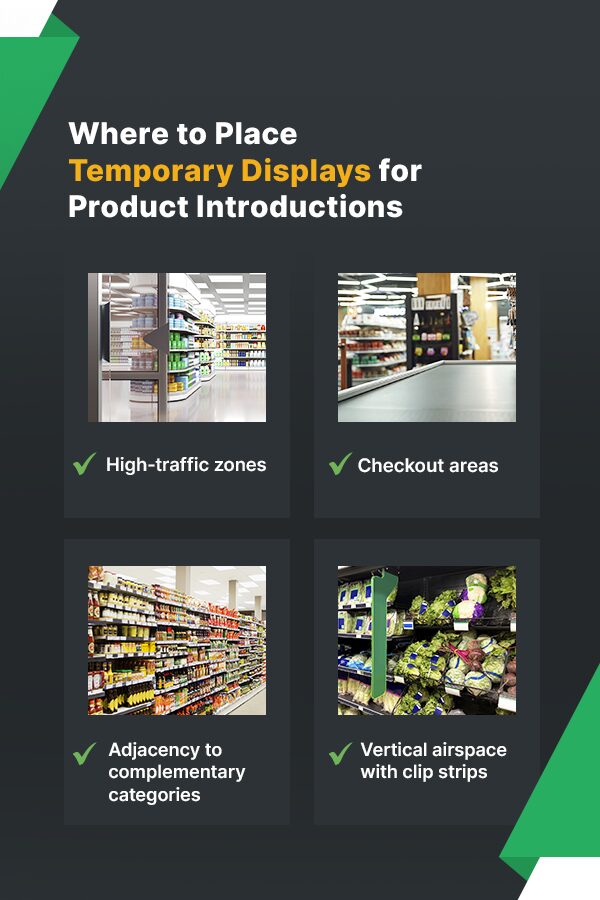

- High-traffic zones: Position displays near store entrances, ends of aisles or perimeter walkways to catch attention from the highest volume of shoppers.
- Checkout areas: Leverage long dwell times at checkouts or service counters. This spot is ideal for impulse purchases and for educating shoppers about new or complex items.
- Adjacency to complementary categories: Place displays next to related products, such as crackers by deli cheese or salsa near chips. This context naturally encourages cross-purchasing and basket-building.
- Vertical airspace with clip strips: Use clip strips in crowded aisles where floor space is limited. This low-cost solution places your product at eye level and increases exposure without competing for full display real estate.
Measure ROI Fast and Scale What Works
A successful launch is a process of testing, learning and scaling. Embracing a pilot mindset is crucial for brands aiming to optimize ROI while mitigating risk. Think of your first 500 display placements not as the finish line, but as a paid experiment to generate actionable insights. This approach allows you to test your strategy in real-world conditions, identify what works and pivot quickly before you commit to a larger investment.
Begin by defining your key metrics. The most crucial is “lift over baseline,” which compares sales with the display present to sales in similar conditions without it. This provides a clear picture of the incremental value your investment is delivering. Additional metrics such as inventory turnover, display compliance rates and qualitative staff or shopper feedback can provide early warning signs of success or trouble.
To get the most from your pilot phase, focus on systematic measurement and consistent documentation. These steps can help you measure ROI and set the stage for future scale-up:
- Determine control stores: Designate similar stores without displays to act as a control group for accurate data comparison. This helps you isolate the direct effect of your display program.
- Create feedback loops: Ask field merchandisers or brokers to send photos of the displays in action. This step lets you monitor execution quality, compliance, and wear and tear, ensuring your displays are set up and maintained as intended.
- Consider iterative design: Use sales data to tweak your approach. Adjust tray counts, update header messaging or modify structural elements based on what’s working in the field before committing to a larger production run.
- Cost down: Once volume increases, move from digital printing to high-speed analog production methods to lower unit costs and maximize budget efficiency.
By treating your launch as an agile experiment and acting on data, you can quickly identify what drives results and lay the groundwork for scalable, cost-effective success across even more stores.
Minimize Financial Risk While Maximizing the “Newness” Impact
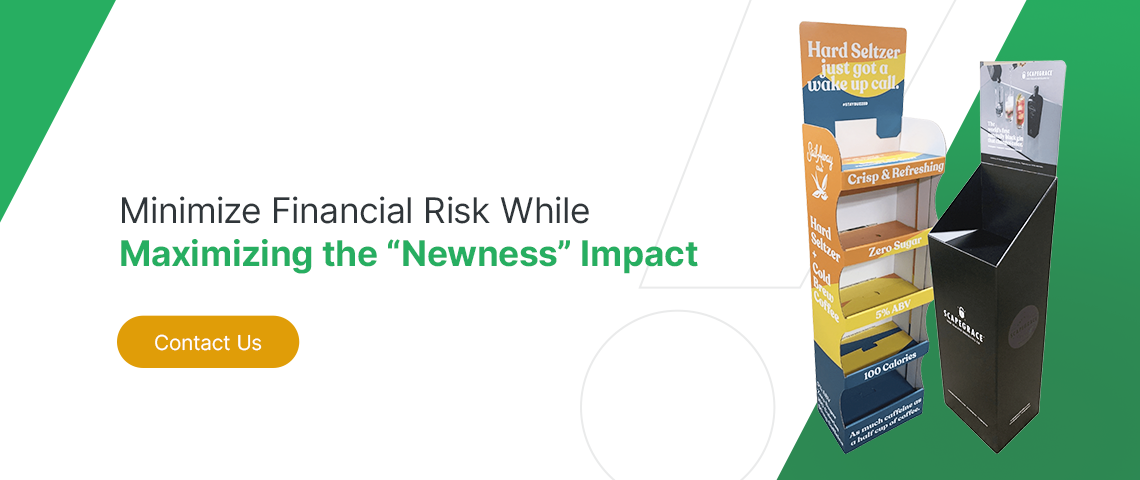
A successful launch requires smart visibility, clear messaging and a display strategy that fits the retailer’s world. Launching a new product doesn’t need to strain your resources, but it does demand the right strategy. Corrugated temporary displays deliver the perfect balance of up-front affordability, speed to market and premium shelf presence. They enable brands to make a bold statement, capture rapid shopper trial and meet retail expectations while keeping risk low.
The real secret to success lies in choosing an experienced manufacturing partner who understands the materials and unique challenges faced by ambitious brands in competitive retail environments. That’s where Creative Displays Now! comes in. We have over six decades of experience in manufacturing, designing and printing corrugated displays. From initial design to national rollout, our team can help you control costs, streamline production and ensure smooth in-store execution.
If you’re ready to maximize impact and minimize risk with affordable launch marketing displays, connect with experts who know how to make every display dollar count. Contact Creative Displays Now! for a quote on a cost-effective, retail-ready product launch display.