

 1-866-244-2214
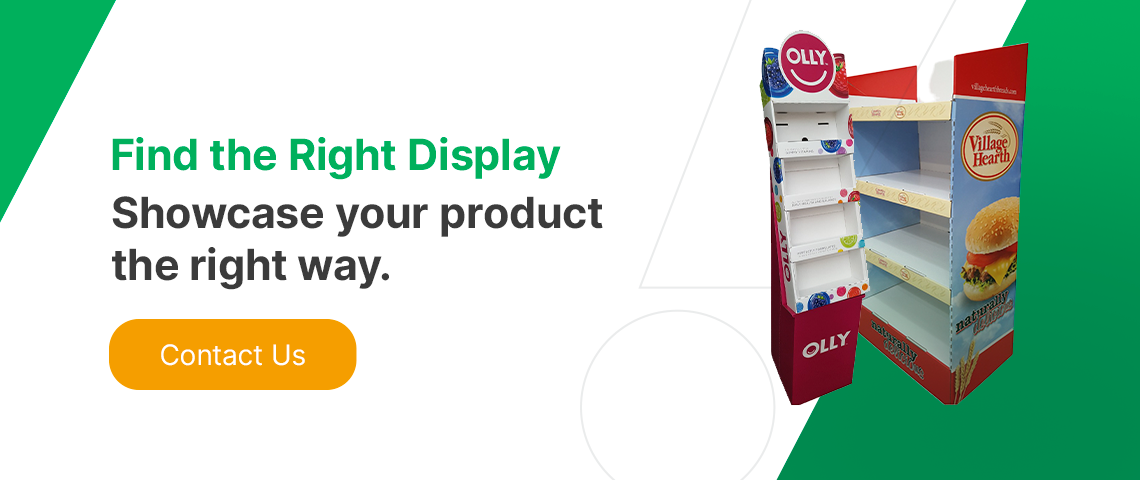
In retail, a product’s story begins at the display. When a shopper walks past a shelf or checkout counter, your product’s presentation can impact their buying decision. An effective display creates order and communicates brand value in seconds.
There are several types of retail displays, and choosing the right one can help brands optimize opportunities at the point of purchase. Discover various display types that support visibility and purchases, and what to consider when selecting an option.
1. Freestanding and Floor Displays

Freestanding or floor displays capture shopper attention. They can be approached from multiple directions, which can create brand presence, organize volume efficiently and simplify in-store operations.
Pallet Displays
Pallet displays combine logistics and merchandising in one structure. Your products arrive on a pallet preassembled, which allows store teams to position and open them quickly, and increase
s compliance when retailers assemble them. Corrugated pallet displays can support heavy loads through reinforced fluting and balanced weight distribution.
Shoppers can access a full pallet display from all four sides. Showcase several colors or flavors, a main product alongside its accessories or a complete health and beauty regimen. The high capacity of pallet displays makes them excellent for high-volume, high-turnover products.
Pallet displays’ large printable surface area provides excellent space for brand messaging, while their modular design allows for flexible configurations such as full, half or quarter pallets, depending on floor space and retailer specifications.
Some of the best products for a pallet display include:
- Food and beverage items
- Technology
- Fresh produce
- Seasonal products
- Home improvement tools
Dump Bins and Case Stackers
Dump bins and case stackers provide flexibility when the product mix or volume changes frequently. These displays are modular and easily movable.
Dump bins feature open tops that invite hands-on browsing. They’re ideal for irregularly shaped products or assortments, and their casual presentation encourages discovery, which is effective for promotions, overstock or bundled offers. Some dump bins feature dividers that allow for better organization.
Case stackers use cases or trays as display modules. Each case functions as packaging and structure, stacked vertically to create a unified presentation. With clean printing and consistent alignment, these displays support brand visibility.
Products found in dump bins and case stackers include:
- Snacks
- Accessories
- Pet toys
- Beverages
- Small hardware
- Home accessories
- Clearance or limited-edition items
Endcap Displays
Endcaps allow brands and retailers to use the ends of aisles to showcase additional products. Retailers love them because their visual appeal can draw more customers to an aisle. Brands also choose them because more shoppers will pass by an endcap than will enter a particular aisle. You can gain visibility even from customers who weren’t planning on stopping at a particular section.
Because of this prime position, they can drive impulse purchases and promote featured products. End caps feature integrated shelving, headers or graphic panels that extend upward, creating a mini in-store billboard.
These displays are great for:
- Bestselling items
- Beverage multipacks, snacks or nutritional products
- Pet treats or accessories
- Small electronics, batteries or household accessories
2. Counter and Impulse-Buy Displays
Counter and impulse-buy displays occupy the checkout area. They help brands engage shoppers at the register, which can turn waiting time into incremental sales. These displays work best for small, high-turnover products that require little consideration.
Counter Displays
Counter displays sit near cash registers or customer service areas. Every shopper passes them, which means modest displays can generate consistent turnover. These displays are durable and lig
htweight, and often include trays or tiered shelves that keep products upright and visible from multiple angles. You can print on corrugated cardboard to keep brand colors and product images sharp and consistent.
Some excellent candidates for countertop displays include:
- Candies and snacks
- Small toys or stickers
- Small cosmetic items
- Travel-sized items
- Seasonal and holiday products
- Gift cards
Counter Shipper Displays
A counter shipper display serves as both a package and a display. Once received, store staff remove a perforated panel or fold down the front to create a small display to hold your products.
These displays are typically designed for periodic promotions or seasonal launches. Because every counter shipper display ships prefilled, they help retailers reduce handling errors. This feature minimizes material usage, saving you money while helping the planet. When a counter shipper wears out or becomes damaged, a retailer can replace it with another from their current stock.
Small, easy-to-grab items alongside enticing products like snacks, candy and magazines are great fits for these displays.
3. On-Shelf and Inline Displays
On-shelf and in-line displays help products stand out on crowded shelves. They can be engineered to fit exact bay widths, product dimensions and shelf depths.
Inline Displays
Inline displays combine shipping, protection and merchandising in a single unit. Designed to move from pallet to shelf, these trays or boxes arrive prepacked with product. Store staff remove a perforated cover or front panel, and the product is immediately shoppable.
Sometimes, stores don’t allow brands to use freestanding displays or take up floor space. Instead, brands must showcase their products on shelves. In these cases, a creative inline display concept allows you to differentiate your products from those surrounding them.
Inline displays are best for these products:
- Beverage cans, bottles or multipacks
- Nutritional bars and single-serve snacks
- Pet treats and smaller pet food bags
- Hardware accessories or boxed electronics
Power Wings and Sidekicks
Power wings or sidekicks use vertical attachments to capitalize on overlooked space. They’re situated at the end of an aisle to add incremental product facings where full bays aren’t available. Some sidekicks are half-size and exhibit a small collection of products at eye-level. Others are narrow, displaying a single vertical column of small merchandise, sometimes called a clip strip.
Full-sized power wings can be the same size as endcaps and feature a few short rows of products. Sometimes, they come with a base that lets a retailer use them as a floor stand.
Power wings can hold products on shelves, hooks or tiered trays. Their structure is light enough for quick installation yet strong enough to handle regular interaction.
Products often exhibited in power wings include:
- Candy and grab-and-go beverages
- Beauty or travel-size health accessories
- Small electronics and charging electronics
- Over-the-counter pharmacy products
- Magazines and books
- Pet toys or treat pouches
4. Signage and Informational Displays
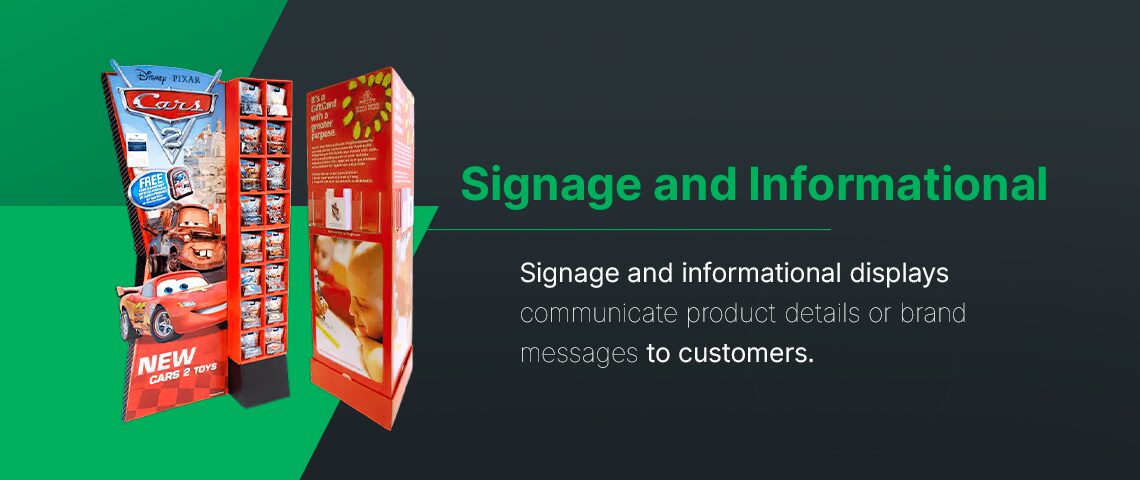
Signage and informational displays communicate product details or brand messages to customers. They help shoppers identify items, understand their benefits and navigate the store more easily. Signage works alongside product displays to highlight new launches, limited offers or category features.
Retail Signage
Retail signage includes floor signs, shelf signs or hanging ceiling systems. These displays offer a cost-effective way to draw attention, present information and support the product story from multiple angles.
Signage is lightweight, durable and easy to print on, which makes it suitable for short-term promotions and longer retail programs. The material allows for bold graphics and clean folds that maintain a professional look. Signage can also be modular or interchangeable, so teams can update messaging as needed.
Go-to products for retail signage include:
- Groceries, beverages and snacks
- Nutritional, health and wellness items
- Electronics
- Tools or hardware
Brochure Holders
Brochure holders are displays that organize and display printed materials. Customers can access more details about a product before making a purchase. These displays can attach to shelving or freestanding displays.
They’re best suited for:
- Electronics or appliances
- Nutritional or wellness products
- Pet food or care brands
- DIY or home improvement items
5. Towers, Stands and Racks
Towers, stands and racks help keep products organized and structured. They support inventory visibility and make efficient use of height in high-traffic areas. They’re often placed along main aisles or in promotional zones to increase exposure.
Skinny Towers
Skinny towers are tall, narrow displays that occupy minimal floor space while creating strong vertical visibility. They can be approached from multiple directions and include shelves and hooks.
These towers are strong enough for multiple SKUs while remaining lightweight and easy to move. Printed headers and side panels add branding and product information. Skinny towers help retailers maintain organization and position new or high-value items at eye level.
Products ideal for skinny towers include:
- Electronics and accessories
- Specialty foods and beverages
- Pet care products
- Wellness products
- Small home tools
Multi-Tiered Displays
Multi-tiered displays feature several levels of shelving that step backward to keep products visible. This layout helps present multiple SKUs in one structure and makes it easy for shoppers to see and access each item.
The design enhances display capacity, which supports efficient merchandising in grocery and club stores. These displays also make restocking faster and help maintain order during peak traffic periods.
Multi-tiered displays are great for:
- Beverage multipack or nutritional drinks
- Pet foods
- Cleaning or home improvement products
- Mix and match products
Book Displays
Book displays accommodate flat or front-facing products for cover visibility. They feature slightly angled trays that hold items upright, allowing shoppers to browse and select products quickly.
These displays help maintain neat organization while improving product visibility in tight spaces. Full-surface printing supports clear labeling and consistent branding.
Companies can use book displays for:
- Catalogs or magazines
- Flat-packed hardware or accessories
- Product information kits or sample sets
- Greeting cards or small inserts
Gravity Feed Displays
Gravity feed displays maintain continuous forward product flow. Sloped surfaces allow products to slide to the front, making restocking easier and improving the shopping experience. The system also supports a first-in, first-out rotation.
This design is reliable for short-term or seasonal use, as these displays can be recycled after each campaign. They also minimize labor by reducing the need for manual shelf adjustment.
Use gravity feed displays for:
- Beverage bottles, cans and cartons
- Nutritional bars or supplements
- Pet snacks or packaged treats
6. Seasonal and Promotional Programs
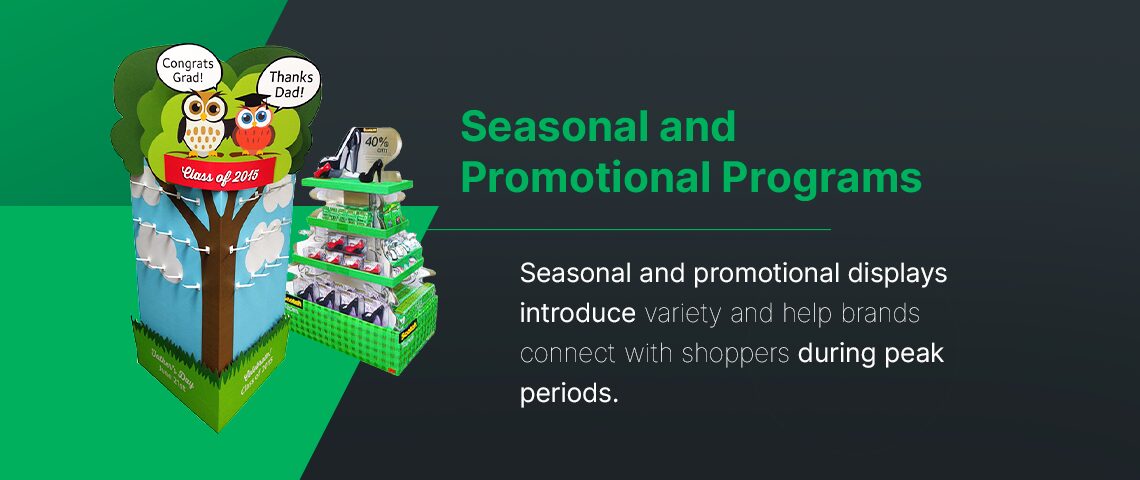
Seasonal and promotional displays introduce variety and help brands connect with shoppers during peak periods. These displays can be printed with bold, high-quality graphics, assembled quickly, and recycled after each campaign.
Holiday and Specialty Displays
Holiday- and specialty-themed displays use shape, color and messaging to position products as timely solutions or celebratory purchases. These displays can be creatively formed as archways, pallet wraps or callouts to match the campaign’s visual theme.
They’re best suited for:
- Confectionery
- Snacks and beverages
- Pet treats or toys
- Garden, outdoor or home items
- Electronics
- Home goods
Temporary Displays
Temporary displays serve promotional, launch or limited-duration campaigns. They get a product to the floor fast with minimal setup, and brands use them to test new SKUs, explore new channels or highlight special offers.
Temporary displays help maintain brand consistency and are ideal for:
- Product launches
- Trial-size samples
- Cross-promotions
- Co-branded initiatives
- Short-term retailer collaborations
- Loyalty programs
- Event-based or time-sensitive promotions
Things to Consider When Choosing a Display for Your Product
Choosing a retail display requires a few considerations. Every cut, fold and panel affects how efficiently your product moves through the retail system. Effective displays combine visual impact and ease of use.
Budget
As you weigh your options, consider how certain aspects fit into your budget, including:
- Material performance: Select materials with a strength-to-weight ratio that makes them reliable for light and heavy loads. For example, corrugated cardboard displays feature a rigid structure while remaining cost-efficient to produce and ship.
- Distribution efficiency: Manufacturers can fabricate displays to the exact size, weight and requirements for club stores and retailers.
- Graphic flexibility: Consider materials that accommodate high-resolution printing and coatings, allowing for vibrant branding and rapid refresh cycles.
Product
The best display design protects a product and makes it easily shoppable.
- Weight: Consider flexible units that can be reinforced through folds and internal supports, allowing them to handle heavier products.
- Shape and count: Pick displays that make organizing, browsing and restocking products easy.
- Visibility: Consider display material that allows for crisp printing and color accuracy.
- Velocity: For high-turnover products, consider designs that support quick access and easy replenishment. For slower-moving or premium SKUs, smaller layouts may create a sense of selectivity and value.
Space
A display that fits well in its environment is easily visible and improves traffic flow.
- Accessibility: Staff and customers should be able to access your products. Display designs that feature tear-away panels, hinged lids or reinforced handles make restocking and shopping faster and safer.
- Retailer specifications: Retailers set parameters for display height, footprint and load limits. Select displays that meet these requirements to ensure a smooth approval and rollout process.
Find the Right Display for Your Brand With Creative Displays Now
Creative Displays Now has over 60 years of experience helping clients with retail displays. We understand the different display types and their characteristics, along with shopper insights and major retailers’ requirements. Take advantage of our expertise to get the most out of your displays. We manage each stage of production in-house to help your project move faster, balance costs and maintain brand consistency.
We’re happy to make recommendations and answer your questions about the store display types you’re considering. Our team will work with you to create something 100% custom for your products. Request your custom display estimate to discuss your vision and needs.