

 1-866-244-2214
For digitally native brands, shifting from e-commerce to in-store marketing opens a new chapter in their growth. It’s also a tactical decision that can drive further success for a brand. E-commerce accounted for about 16% of total sales in the third quarter of 2025. In other words, over 83% of retail sales still occur offline, which means an on-shelf presence remains one of the most powerful ways to reach new customers and strengthen brand visibility.
Transitioning from building a solely online brand to working with buyers, merchandisers and retail partners can be challenging, but don’t let it intimidate you. Success depends on translating your digital strengths into an in‑store experience that resonates with retailers and shoppers.
This guide walks you through the most effective display strategies to support your “clicks-to-bricks” goals, helping you capture attention from loyal online fans and new in‑store audiences alike.
Why E-Commerce Success Doesn’t Translate to In-Store Wins
While online and in‑store merchandising share some foundational principles, success in e‑commerce doesn’t automatically translate to success on the shelf. Online shopping is a highly controlled, personalized experience, while being in a physical store is sensory, fast‑paced and shaped by the surrounding environment.
Digitally native brands must adapt familiar strategies to thrive in brick‑and‑mortar spaces.
- Capturing attention: Online, customers find your products through search, targeted ads and curated digital storefronts. You control the environment and the path to purchase. In retail, you must earn attention in a crowded, competitive space where shoppers make split‑second decisions. Well‑designed physical displays tailored to e‑commerce brands become essential tools for visibility and foot‑traffic conversion.
- Customer engagement: Digital engagement relies on personalized content, interactive campaigns and user‑generated media. In-store shoppers naturally want to touch, test and compare products, making tactile, visually compelling displays a critical extension of your brand experience.
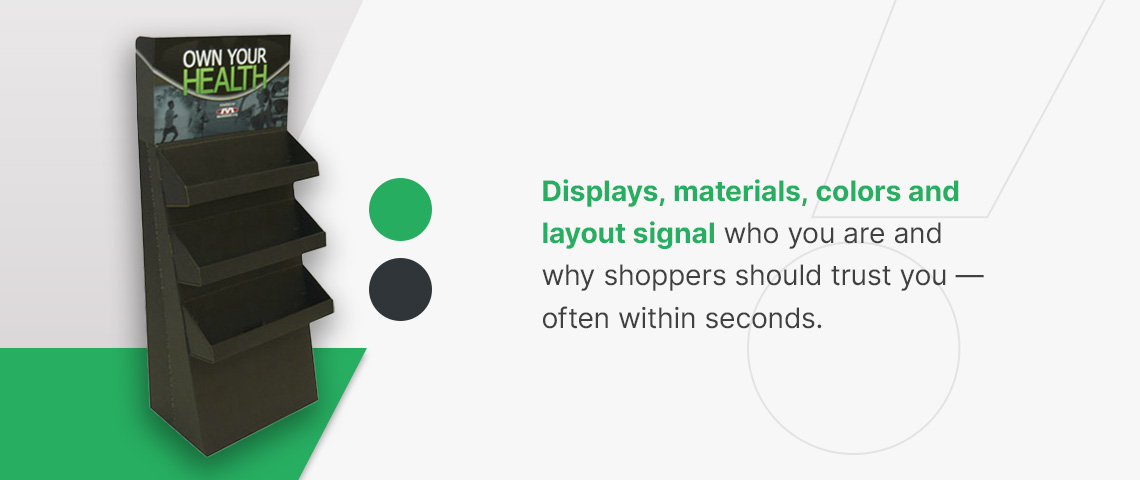
- Brand image: Online, you shape your brand through your website, social channels, influencers and paid media. In retail, your visual merchandising does that work. Displays, materials, colors and layout signal who you are and why shoppers should trust you — often within seconds.
- Shopping experience: E-commerce offers an “infinite shelf” where customers can browse, research and compare products at their preferred pace. In stores, the experience is finite and carefully curated. Shoppers rely on what’s directly in front of them, so your packaging, placement and physical store displays must guide quick, confident decisions.
3 Strategic Pillars to Make Your Brand Translate Offline
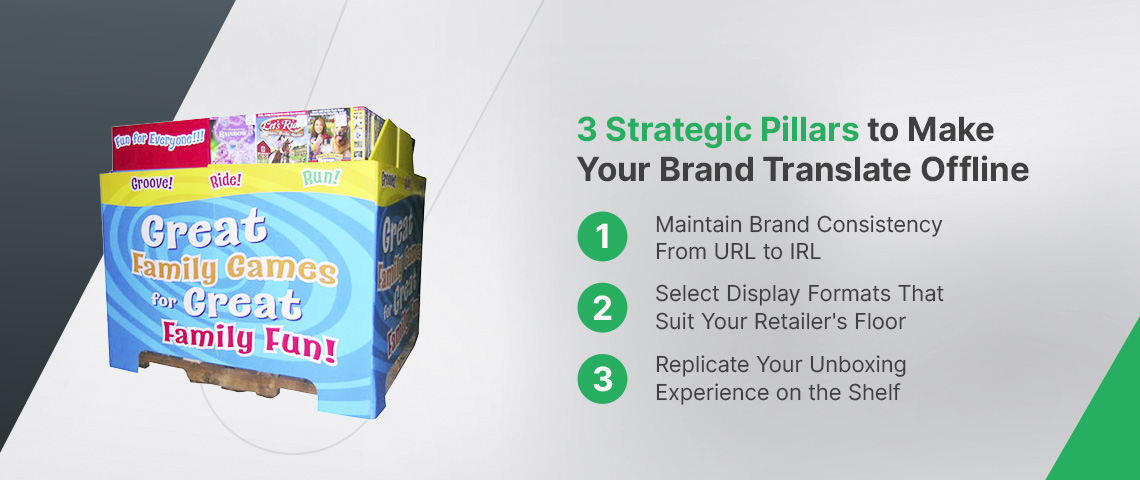
There are three nonnegotiables to remember when shifting from e-commerce to in-store merchandising — identity, fit and experience. Each of these pillars is vital to ensuring your in-store presence has an impact equal to or greater than your website and e-commerce efforts.
1. Maintain Brand Consistency From URL to IRL
When your online image matches your retail merchandising, your customer base will recognize you immediately, whether on their phone screen or a colorful display shelf.
Use these tips to craft a cohesive brand image.
- Match the aesthetic: Your in‑store presence should look and feel like your digital one. If you’ve built a minimalist online brand, carry it through with the same color palette, typography and visual cues. Familiar design elements help shoppers connect what they see on the shelf with what they’ve already seen online.
- Promote your values: Brand consistency extends to values, too. For instance, if your e-commerce brand prioritizes sustainability, your retail display materials must be equally eco-friendly.
- Unify the voice: Your brand’s tone and language should be consistent across online and offline efforts. If your e-commerce side takes a mass-market, friendly approach, your displays should reflect that broad voice.
- Synchronize promotions: Online-only and in-store-only offers have their place, but syncing promotions strengthens brand cohesion. When your website and your displays reinforce the same message, shoppers experience your brand as coordinated and reliable — no matter where they encounter you.
2. Select Display Formats That Suit Your Retailer’s Floor Plan
When your display aligns with a retailer’s floor plan, traffic patterns and operational requirements, you can avoid costly rejections, reduce delays and ensure your campaign reaches the sales floor on schedule. For many digitally native brands, temporary displays offer the most reliable path to achieving that fit.
- Mobility: Lightweight construction and compact footprints make temporary displays easy for store teams to move, install and remove without special tools or lengthy setup. This flexibility helps retailers place your display where it will perform best.
- Affordability: Temporary displays cost significantly less to produce than permanent fixtures. Reusing structural designs across campaigns lets you refresh creative elements without absorbing new tooling costs, keeping your budget focused on impact rather than infrastructure.
- Risk mitigation: Permanent fixtures lock you into long-term solutions that may not deliver the return you expect. Temporary DTC brand retail display solutions let you A/B test formats, messaging and placement, giving you the performance data you need to confidently commit to larger investments.
- Flexibility: Temporary displays offer unmatched adaptability for holiday or limited-time campaigns. You can reuse proven structures and update the artwork, reducing lead times and keeping seasonal rollouts efficient and cost‑effective.
- Compliance: Most temporary displays follow standardized footprints that align with retailer guidelines. This consistency minimizes the risk of rejection, strengthens trust with buyers and demonstrates that your brand understands and respects their operational needs.
3. Replicate Your Unboxing Experience on the Shelf
Experience ties everything together by inspiring an emotional connection that drives impulse buys. A refined in-store shopping experience provides an unforgettable first impression that online merchandising cannot replicate.
Try these tactics to achieve a unique unboxing experience.
- Prioritize tactile engagement: A 2024 behavioral science study suggested that the inability to handle products is a significant downside of e-commerce. In-store displays overcome this by triggering the “endowment effect” — where holding a product increases its perceived value and the likelihood of a purchase — through cutouts or specialized packaging.
- Integrate digital assets: This tip ties back to creating a unified experience for physical retail expansion for online brands. By including digital assets, such as QR codes that link to reviews or your website, you bridge the digital and in-store gaps and promote a seamless shopping experience.
- Simplify discovery: Shoppers can walk past your display in mere seconds, so you must capture immediate attention. Use concise language and visuals that convey the message effectively.
- Maintain visual order: As stock levels dwindle throughout the day, train your merchandisers to move products to the front of the display to create the illusion of a fully stocked shelf. This practice signals abundance, popularity and value.
3 High-ROI Creative Display Types to Launch Your In-Store Presence
When it’s finally time to launch your products, consider using creative display types that will boost your ROI and build trust between you and your new in-store customer base.
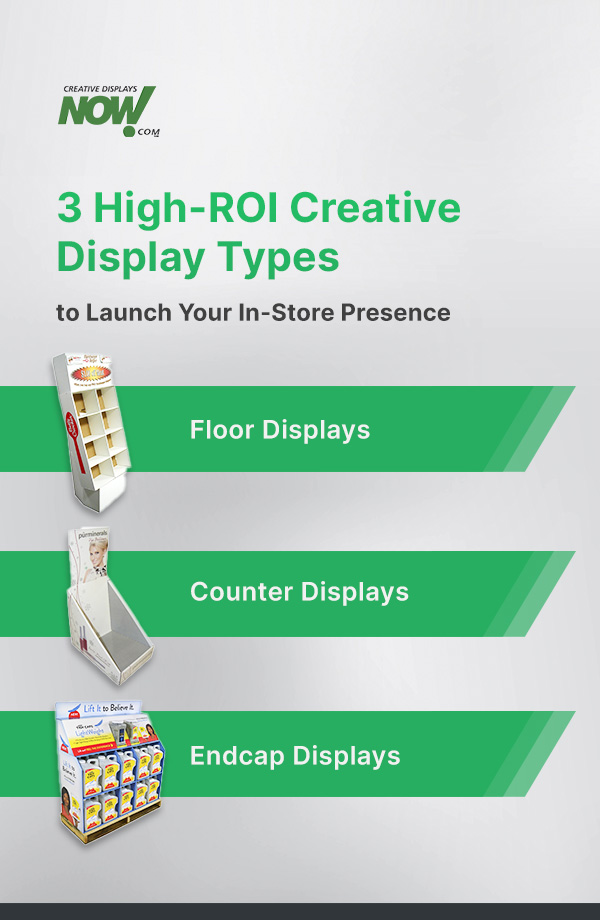
1. Floor Displays
Floor displays are a practical way to dominate the aisle and promote your brand’s story. They’re ideal for product launches and high-volume inventory, such as toiletries. They are also excellent at capturing and retaining customer attention.
- Act as a billboard: Because floor displays occupy a large area, they can serve as billboards to share your brand’s identity with customers. It can be particularly effective if your display has an instantly recognizable aesthetic.
- Separate from competitors: A floor display physically isolates your product and makes your brand stand out on crowded shelves. You also portray your product as a unique item that customers may not see anywhere else in the store.
- Drive traffic interruption: Placing floor displays in high-traffic areas naturally invites engagement. You can make it the foundation of your in-store strategy for digital-first brands, especially if it’s your first time transitioning from e-commerce to retail merchandising.
- Maximize inventory: Floor displays are perfect for high-volume items, as they offer more space than a standard shelf. Maximizing your inventory reduces restocking frequency during peak seasons and high-traffic campaigns.
2. Counter Displays
Strategically located counter displays drive point-of-sale purchases. Use them to promote lower-priced items such as candy or snacks that customers may want to treat themselves to while shopping.
- Capture impulse buys: Counter displays catch customers with their wallets open. They allow you to experiment with low-risk products like sample-sized lotions and lip balms. Customers are willing to try these products without devoting much research to them, making them easy add-on purchases.
- Maximize dead space: Smaller or newer brands typically overlook the checkout area in favor of focusing on high-traffic shelves. Filling this dead space with your product builds trust and recognition, even with a minimal physical footprint.
- Encourage bundling: Capitalize on product positioning by placing related items, such as batteries and electronics, near each other at checkout. This practice encourages bundling, which can increase your average order value.
3. Endcap Displays
Like counter displays, endcap displays effectively prompt impulse purchases with their prime locations at the ends or beginnings of retail aisles. However, they are more likely to contain high-value goods instead of promoting impulse buys.
- Premium brand positioning: Thanks to their strategic location, endcap displays create a premium, exclusive perception for your products. This positioning signals market authority and leadership to shoppers.
- Maximum impression volume: This retail hot spot also gives your brand the highest in-store visibility, capturing shoppers’ attention before they enter the aisle. For brands transitioning from e-commerce to in-store, endcap displays create an invaluable impression of popularity.
- Enhanced educational space: A larger surface area provides more room to educate your shoppers about your product’s unique selling proposition and benefits. This benefit is especially crucial for new players in retail merchandising whose products are niche or complex.
- Seasonal urgency: Endcap displays are an ideal format for promo or seasonal campaigns, as they put your products in the spotlight. They also work well for product launches or limited-time offers, creating FOMO that shoppers can’t resist.
How to Accurately Calculate Retail Display ROI
Calculating your retail display ROI ensures a profitable physical footprint. Follow these tips.
- Track metrics to ensure accurate results: Keep track of metrics like sell-through rate, which is the percentage of inventory sold during your campaign’s duration, and lift, your sales increase during the display period versus without the display.
- Use the profit-per-square-foot formula: (Total sales – Cost of goods sold – Display costs) / Total square footage of display = profit per square foot.
- Monitor the billboard effect: During your campaign, ensure your display’s billboard effect drives digital engagement by tracking spikes in visits from the retail store’s ZIP code to your local online traffic.
Ready to Build a Smooth Transition From E-Commerce to In-Store Experience?
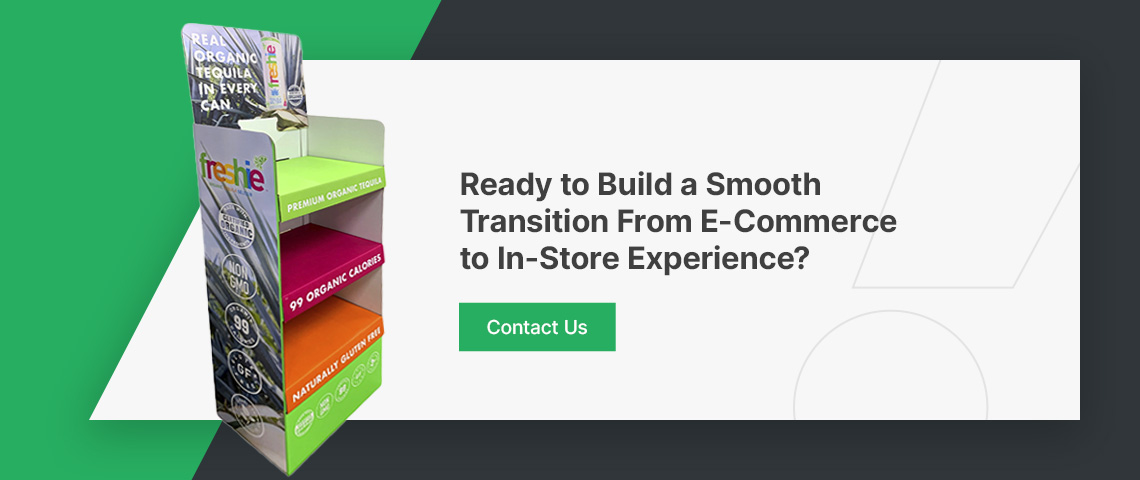
Transferring your e-commerce success to in-store sales is an achievable goal with a tactical approach and a trusted display manufacturer. If you’re looking for displays that will help your e-commerce brand stand out in retail, Creative Displays Now has you covered.
With our highly customizable, structural designs and 100% recyclable corrugated displays, we help brands easily introduce new campaigns and products while being eco-friendly. We also have over 60 years of experience and proven success, backed by real-world case studies, in delivering the perfect temporary solutions to help brands sell more merchandise.
Let us provide you with captivating displays that engage shoppers and smooth your online-to-offline retail strategy. Request a quote today.