

 1-866-244-2214
You’ve spent months perfecting a product you believe in. You’ve refined your formulation, built a visual identity and gathered encouraging early feedback. Yet the moment you enter the retail space, the path to the customer becomes complicated. Your product now sits among nationally recognized names and a diverse array of options.
This final stretch, or the last three feet, is where some startups realize the gap between having a great product and selling it in stores. The retail environment is crowded and competitive. Established brands hold consumer trust, retailers manage limited shelf space and new brands face the pressure of proving their value quickly.
Limited name recognition reinforces that startups cannot rely solely on brand equity. However, with the right display strategy and solutions, and an effective way to track success, you can attract and retain your ideal customer. Discover how new brands can win at retail with strategic display solutions.
Understanding Today’s Retail Landscape for New Brands
The retail environment presents new brands with a wide range of possibilities and some key challenges. Big-box chains and grocery stores influence how shoppers discover products, and most consumers now move fluidly between these settings. As a result, retailers may be motivated to curate assortments that feel fresh and differentiated.
However, this variety creates competition and can make it hard for startups to secure visibility without a clear merchandising plan. Explore the opportunities and challenges of the current retail space below.
Opportunities of the Modern Retail Ecosystem
Modern retail is a blended ecosystem of big-box retailers, specialty stores and established chains. This mix creates multiple entry points for emerging brands and allows them to introduce their products in environments aligned with their target customer. Stores value variety because it helps them stay relevant as shoppers look for niche or premium products that differ from long-established options. Within this setting, new brands can benefit. Retailers are seeking unique and innovative products to differentiate themselves from their competitors.

Category managers closely monitor emerging trends and may recognize that consumers tend to gravitate toward new solutions when they feel meaningful or differentiated. This demand for novelty may open doors for new brands that bring something distinct in positioning or design. It also means retailers may be more flexible in offering temporary placements, curated displays or trial programs that allow startups to test performance.
Challenges of the Modern Retail Ecosystem
However, these advantages come with challenges. Shelf space remains limited, and established brands occupy some high-traffic placements. These brands may also invest in promotions and long-term retail partnerships, making it challenging for newcomers to gain the same level of visibility. Even when a product secures shelf space, it still competes with other alternatives that shoppers recognize.
This is where execution becomes critical. Retailers expect new brands to demonstrate early performance, as slow turns or poor visibility can negatively impact category productivity. The cost of underperformance can create operational friction for the retailer and may make it hard for the startup to secure product placements.
Why Display Strategy Matters More for Startups
Displays are one of the few tools a startup can control within a retail setting. They are especially important for several reasons:

- Point-of-decision impact: They are present at the moment when shoppers make decisions, making them valuable for new brands that lack established brand equity or a proven advertising history to rely on. The display can be a brand’s first physical interaction with a potential customer, and helps businesses express their story and value proposition.
- Attracting attention: Established brands can rely on years of marketing investment. Their logos and taglines activate instant recognition. Startups do not have this advantage, so the display must attract attention in environments that were not designed with your brand in mind. This means structural design, color and product placement must work in tandem to interrupt routine shopping behavior. An effective display gives the shopper a reason to look at and ultimately choose your product.
- Educating shoppers: Displays also educate. Retailers rarely have the time or staffing to explain what makes a new product different. The display must provide concise messaging and a layout that guides the shopper’s eye. Ideally, product displays should address questions a shopper might have at the shelf and explain how the product fits their needs. This clarity helps new brands overcome the hesitancy shoppers may feel when encountering an unfamiliar name.
Display strategy also helps convert interest into actual sales. Various types of displays offer visibility, and for a startup, how these units are placed can temporarily shift attention away from established competitors and toward the new entrant.
How to Position Your Brand for Retail Success
Retail strategy for new product brands requires a clear understanding of where your customer shops, how retailers evaluate new items and what early investments deliver the strongest return. When you connect these elements effectively, you can create a retail presence that works. Below are strategies to position your brand for retail success.
Identify Your Ideal Retail Partners and Environments
Choosing the right retailer involves aligning your product with stores where your target customer already shops, and where your price point makes sense. In-store audits and visits to competing retailers help you understand how products are merchandised, what price tiers perform well and which brands maintain shopper loyalty. You can position your product to resonate with the retailer’s goals by studying these details before presenting your pitch.
Once you understand the market terrain, narrow your focus to retail partners that align with your target demographic. For example, a premium product may perform better in specialty or lifestyle-oriented chains, whereas value-driven items may find faster adoption in big-box and mass retail. Matching your product’s price point with the retailer’s customer expectations helps you avoid friction at launch.
It’s also essential to assess how each retailer approaches new brand introductions. Some may offer curated programs or seasonal rotations that create low-risk opportunities for emerging brands, while others rely on data and prefer working with startups that demonstrate performance in smaller retail environments first. Understanding these differences helps you approach each retailer with a tailored strategy.
Maximize Impact With Limited Resources
Startups sometimes lack the budget to cover large-scale promotions or extensive marketing programs. Therefore, it’s essential to allocate resources in a way that delivers measurable results. An effective way to achieve this is by adopting a return-on-investment (ROI)-focused mindset. Every display and placement should have a clear purpose tied to testing and improving.

Temporary displays allow you to experiment with messaging and placement at a fraction of the cost of permanent fixtures. They allow you to validate performance before making larger commitments, and also help build trust with retailers by showing that your brand can generate demand.
A smart budgeting plan ensures your early investments are controlled and strategic. Consider the following:
- Budget for small-batch displays: This allows you to observe shopper engagement and sales performance before scaling.
- Invest in one display concept: A focused approach may perform better than spreading resources across multiple formats.
- Reserve funds for design refinement: Early feedback from retailers or store staff can reveal small adjustments that help improve performance.
- Consider replenishment-ready inventory: Effective initial turns can lead to accelerated orders, and being prepared to restock reinforces reliability with the retailer.
- Design for flexibility: Choose display structures that can be reused for multiple promotions or seasons to control costs.
First-Time Retail Display Solutions That Drive Results
An effective display strategy allows new brands to gain visibility when they’re entering competitive retail settings. Corrugated cardboard displays provide startups with a means to test markets and refine their messaging before committing to larger-scale programs.

These solutions are cost-effective and lightweight, which keeps operational costs manageable during early growth. They require minimal labor from retailers to assemble and place, integrating easily into store workflows and helping your products get displayed quickly. This ease of use can help generate momentum.
Below are some display solutions that drive results.
1. In-line and Products Displayed Quickly
In-line placements fit seamlessly into retail shelves and place your offerings at the shopper’s path, helping to reinforce your presence within a category. When retailers can merchandise your product quickly, they can ensure your items stay visible and consistently stocked. These accelerated setups support sell-through and give retailers confidence that your brand can meet their operational expectations.
2. Counter Displays

Counter displays place your product in a shopper’s line of sight at high engagement touchpoints. These units work well for items driven by impulse. Their compact footprint allows retailers to introduce your product while maintaining planogram setups, which helps reduce the perceived risk of trialing a new brand.
Consumers come into contact with counter displays at checkout or service desks, so these solutions help create immediate exposure and validate messaging and visual hierarchy.
3. Floor Displays and Dump Bins
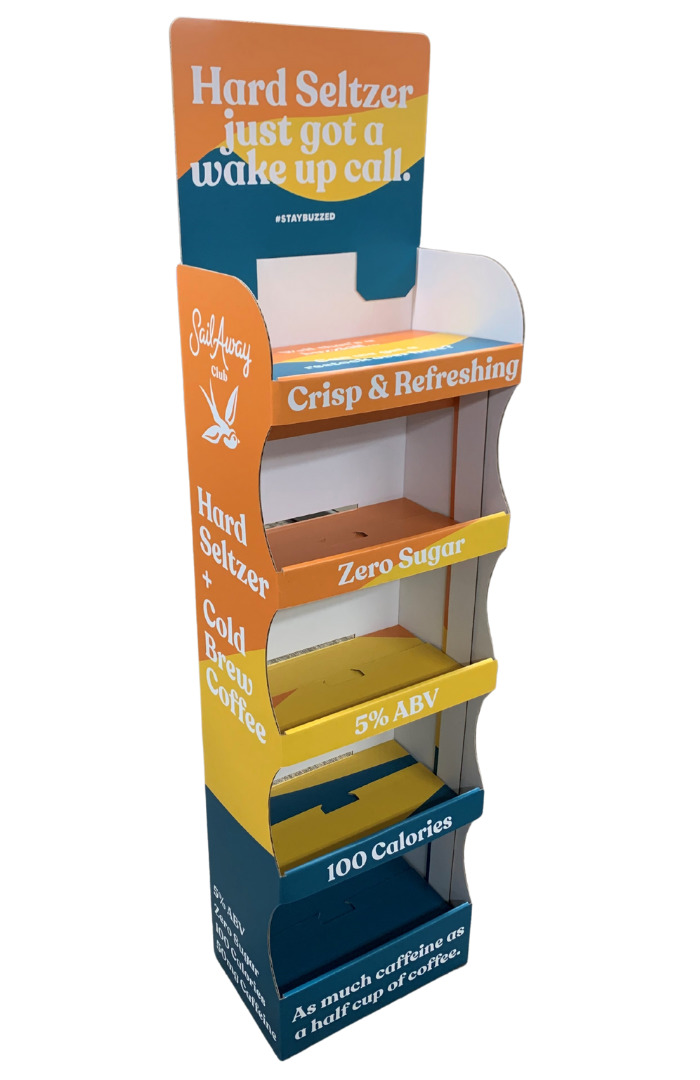
Floor displays and dump bins provide startups with access to high-traffic spaces that encourage physical interaction. Corrugated floor units enable you to present multiple SKUs or variants together, allowing shoppers to understand your full product offering at a glance. Their prominence supports products that benefit from storytelling or abundant presentation.
Dump bins and case stacker displays encourage browsing and work well in categories where handling or comparison influences conversion. These units remain economical to produce, ship and assemble because they rely on effective and simple corrugated cardboard engineering.
Retailers appreciate their speed and flexibility during promotional surges or seasonal peaks, while startups benefit from the sense of availability and volume they project.
4. Endcaps and Power Wings

Endcaps and power wings offer some of the strongest visibility in-store because they sit in high-traffic paths where shoppers pause or scan for items. Endcaps offer ample branding real estate, providing you with room to clearly communicate differentiators or usage ideas.
Power wings, also known as sidekick or side wing displays, extend visibility by using vertical space on endcaps or pallet sides. They offer a strategic way for emerging brands to compete with category incumbents.
Temporary vs. Permanent Display Investments
Understanding the differences between temporary and permanent displays helps new brands make smarter decisions about where to allocate their budget and how to support products at various stages of growth.
Temporary units provide startups with the flexibility they need during early market entry, while permanent fixtures reinforce their long-term presence once a product has proven its stability and reliability. Below are some considerations to help you match the right option to your objectives.
Temporary displays work best for the following:
- Product launches
- Short promotional cycles
- Seasonal pushes
- Early-stage testing
They allow brands to validate messaging and assess shopper engagement. Temporary displays help new products gain visibility quickly, and brands gather the performance data they need to transition into high-visibility zones.
Permanent displays support products with consistent demand and multiyear placement. Their stability helps reinforce brand identity and create predictable points of recognition. Once the brand has demonstrated traction and alignment with a retailer’s goals, a permanent fixture strengthens the brand’s presence on the floor.
Design, Materials and Durability
Temporary displays feature cost-efficient, versatile and fast-to-produce corrugated materials. Their lightweight construction keeps shipping costs manageable while still offering enough stability for short-term programs. These units can withstand frequent restocking cycles.
Permanent displays often feature metal, acrylic, wood or laminated board to support heavier items and sustain their appearance over long periods. This sturdiness allows them to maintain consistent branding and structural integrity in high-traffic settings. A well-built permanent fixture also reduces the risk of visual degradation, which can impact shopper perception over time.
Display Methods and Placement
Temporary displays fit the fluid nature of retail promotions. You can introduce them quickly, move as needed and integrate them into areas that benefit from impulse purchasing or high foot traffic. Their adaptability makes them ideal for testing multiple locations or campaigns, allowing brands to gather valuable performance insights before scaling.
Permanent displays provide long-term integration within dedicated brand zones. They help establish reliability and presence at scale, creating predictable shopping experiences and reinforcing brand authority.
How to Implement Your Display Concept on a Store Floor
Bringing a display from an initial idea to an approved fixture on a retail floor involves aligning design, production, logistics and compliance so the finished unit functions seamlessly in a high-traffic store environment. Retailers expect displays to meet both structural and operational expectations, so it is essential to work with partners who understand the creative, functional and regulatory aspects of retail execution.
What to Look for When Working With Display Partners
A capable display partner reduces friction across the entire development cycle by assisting with design feasibility, cost efficiency and retailer readiness. Look for the following capabilities:

- Structural design: In-house engineering teams can turn a creative concept into a form that holds weight properly, withstands shopper handling and ships flat. When engineering and creative development happen under one roof, communication is faster, and revisions stay aligned with retail requirements.
- Printing and manufacturing: When production is handled internally, color accuracy, material selection, die cutting precision and finishing steps stay consistent from prototype through production. This continuity helps ensure that what the retailer approves on paper is what arrives in stores. Experienced partners also understand how various materials behave under different loads and conditions, which helps prevent structural issues.
- Experience with major retailers: Each retailer has its own specifications, approval processes and operational requirements, so a partner who has experience with these systems can anticipate potential issues early. This reduces the risk of redesigns, delays or compliance issues.
- Collaborative mindset: A collaborative development process enables your team to remain engaged in the display strategy process while benefiting from expert oversight. When collaboration is strong, ideas move quickly, problems get resolved earlier and prototypes evolve with a clear understanding of brand goals and retailer expectations.
Retail Compliance and Operational Considerations
Retailers such as Walmart and Target enforce detailed specifications covering everything from the display’s footprint and materials to safety standards, load limits and fire code compliance. These rules protect shoppers and maintain consistency across aisles.
Understanding these requirements before display design and manufacturing begins keeps the project aligned with what the retailer will approve. A display partner familiar with these standards can guide weight distribution and other choices so the unit is compliant. Other aspects to consider include:
- Shipping: Displays must arrive at stores in excellent condition. Flat-packed, clearly labeled components reduce freight costs and minimize handling errors. Packaging should protect edges, prevent warping and keep printed surfaces intact so store employees receive a display that looks ready for the floor.
- Assembly: When assembly requires no tools or only a few intuitive steps, retail staff can set up the unit quickly and correctly, which reduces the risk of errors that can compromise performance or shorten display life.
- Stocking: Clear product lanes, stable shelves and sensible access points reduce stocking time, prevent damage and support consistent merchandising. When these operational details are planned from the beginning, the display becomes easier for retailers to support and more reliable for shoppers to engage with.
How to Measure Success and Optimize Startup Product Display Strategy
Tracking the performance of your displays helps you understand which strategies are effective. Measurement allows startups to make data-driven decisions that improve new brand retail visibility, shopper engagement and sales.

Key performance indicators (KPIs) provide actionable insights and can help quantify success. Monitoring these metrics allows you to identify which displays drive results and inform inventory decisions. Important KPIs include:
- Sales lift: This metric measures the increase in sales attributable to the display compared with baseline sales. It shows whether your investment is influencing shopper behavior and generating incremental revenue.
- Sell-through rate: This KPI tracks the speed at which inventory moves from the display to the shopper. High sell-through may indicate effective placement, messaging and product appeal, while slower rates may signal the need for adjustments.
- Qualitative feedback: This metric gathers observations from store managers or brand ambassadors and informs how shoppers interact with the display, which products attract attention, and whether messaging and layout are clear and engaging. Feedback may also highlight ease of setup, visibility and competitiveness with surrounding units.
Win at Retail With Display Solutions From Creative Displays Now!

Creative Displays Now! has over 60 years of experience helping new brands stand out on crowded retail floors with custom displays that grab attention, communicate a story and drive trust. From design and prototyping to printing, manufacturing, and distribution, all handled in-house, we ensure your display arrives ready to use.
We understand the unique requirements of major retailers, shopper behavior and how product displays create impact. Our team works with you to select the right formats and messaging, so you can test and optimize campaigns. We provide solutions that are cost-effective, easy to ship and simple to assemble.
Contact us today to learn how we can help you create displays that engage shoppers and deliver measurable results.