

 1-866-244-2214
Imagine your new product launch is three weeks away. The retail display arrives at the warehouse exactly as you envisioned — bold, eye-catching, perfectly aligned with your brand. The colors are spot-on, the structure securely holds your products, and it meets every retailer’s compliance requirements. Your display goes straight to the sales floor and starts driving results.
That’s the power of a well-crafted retail display brief. When brands and manufacturers have a shared understanding from day one, projects run smoothly, timelines stay on track, and the finished display delivers exactly what you need. A strong brief is the foundation that turns your vision into reality.
This guide will show you exactly what to include in your brief to set your retail display manufacturer up for success and ensure you get the display you envisioned, on time and on budget.
How to Create a Bulletproof Retail Display Brief
Think of your retail display brief as a blueprint. The more detail you provide up front, the fewer surprises you’ll encounter during production. A comprehensive brief should cover everything from high-level business objectives to granular specifications. Here’s what you should include:
Project Overview and Business Goals
Start by setting the stage. What is this display meant to accomplish? A strong POP display brief begins with clear, measurable business goals more detailed than “increase sales.” Be specific about what success looks like for this project.
Consider your primary objective:
- Launching a new product that needs awareness?
- Driving trial through sampling?
- Supporting a seasonal promotion or competing for shelf space in a crowded category?
Each objective will influence design decisions, from display size and placement to messaging and visual hierarchy. Include quantifiable targets whenever possible. For example, you might aim to increase product velocity by 15% in test markets or achieve a specific sell-through rate within the first 30 days. These benchmarks help your retail display manufacturer understand the stakes and design accordingly.
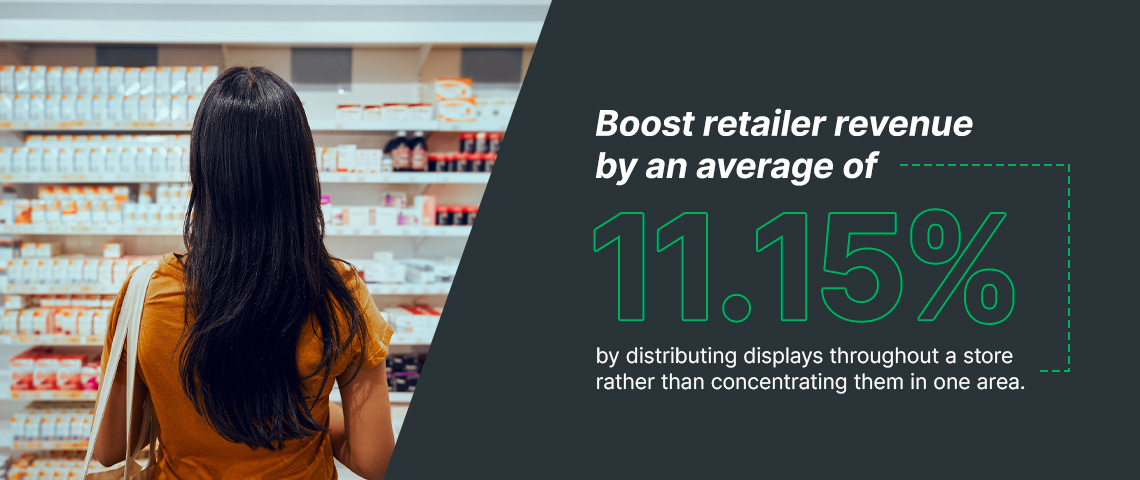
Location strategy matters, too. Research shows that distributing displays throughout a store rather than concentrating them in one area can boost retailer revenue by an average of 11.15%. If your goal involves strategic placement across multiple store zones, make that clear in your brief so the manufacturer can design displays that work in different environments.
Target Audience and Key Consumer Insights
Demographics provide a starting point, but psychographics and behavioral insights complete the picture. Consider who you’re trying to reach and what motivates them to buy. A display designed for budget-conscious parents making quick trips to a convenience store will look very different from one targeting health-focused millennials browsing a natural foods retailer.
Dig deeper than age and income alone. What problem does your product solve for the shopper, and are they brand-loyal or deal-seekers who make planned purchases versus impulse buys? Understanding the shopper’s mindset helps the design team create a display that stops them in their tracks.
Include behavioral insights. If your target audience is kids, you may need to position the display at a height that’s easy for children to reach. If they’re comparison shoppers who scrutinize labels, the design should make product information easy to access. The more context you provide about the shopper’s journey, the better equipped your manufacturer will be to create a custom retail display that converts browsers into buyers.
Product Information and Key Messaging
Your manufacturer needs comprehensive product details to design a display that fits and functions properly. Include dimensions and weight for each SKU, packaging configuration and the number of units the display should hold. If you’re featuring multiple products or sizes, specify exactly how many facings each should receive.
Your message is also crucial. What’s the one thing you want shoppers to remember? Identify your single-minded proposition and state it clearly. A muddled brief with multiple competing messages leads to cluttered displays that confuse rather than convince.
Equally important is defining the desired shopper action. Your brief should specify what you want customers to do when they encounter your display:
- Immediate purchase: The display should make grabbing the product effortless, with clear pricing and compelling reasons to buy now rather than later.
- Product trial or sampling: Include space for samples, testers or demo units, with messaging that invites interaction and experimentation.
- Information gathering: Provide QR codes, tear-off recipe cards or brochures that let shoppers learn more and engage with your brand beyond the transaction.
- Promotional participation: If you’re running a contest, rebate or limited-time offer, the display needs to communicate the mechanics clearly and include any required take-one materials.
This stage is also where you communicate any unique product characteristics that affect display design. Fragile items need extra support. Products with expiration dates might require rotation-friendly structures. Bottles and cans have different stacking requirements than boxes. Temperature-sensitive goods may need specific material considerations. The more your manufacturer knows about your products, the better they can design retail displays that showcase them effectively.
Print Specifications and Branding Guidelines
Visual consistency is key. Include comprehensive branding guidelines to ensure the finished display aligns perfectly with your brand identity. Attach your brand style guide or create a condensed version that covers key elements.
Specify your color palette using Pantone or CMYK values rather than generic color names. “Red” can mean a thousand different shades. Provide high-resolution logo files in the required formats and indicate minimum size requirements and clear space rules. If certain logo variations are approved for retail use, note which ones apply to this project.
Include examples of approved imagery, fonts and graphic treatments. If you have photography or illustrations you’d like featured, provide high-resolution files. If the manufacturer will be sourcing images, give clear direction on style, tone and subject matter. The more reference materials you provide, the closer the first proof will be to your vision.
Prepress and printing specifications are also helpful if you have preferences for printing methods. Whether it’s digital, flexographic or lithographic, state them in your brief. Different methods offer different advantages in terms of color fidelity, cost and turnaround time. Your retail display manufacturer can guide you based on your priorities, but knowing your preferences up front streamlines the process.
Structural Requirements and Specifications
Here’s where strong briefs stand out. Specific requests that detail physical attributes give manufacturers exactly what they need to work with. Start with display type. Each serves different purposes and works in different retail environments. Common options include:
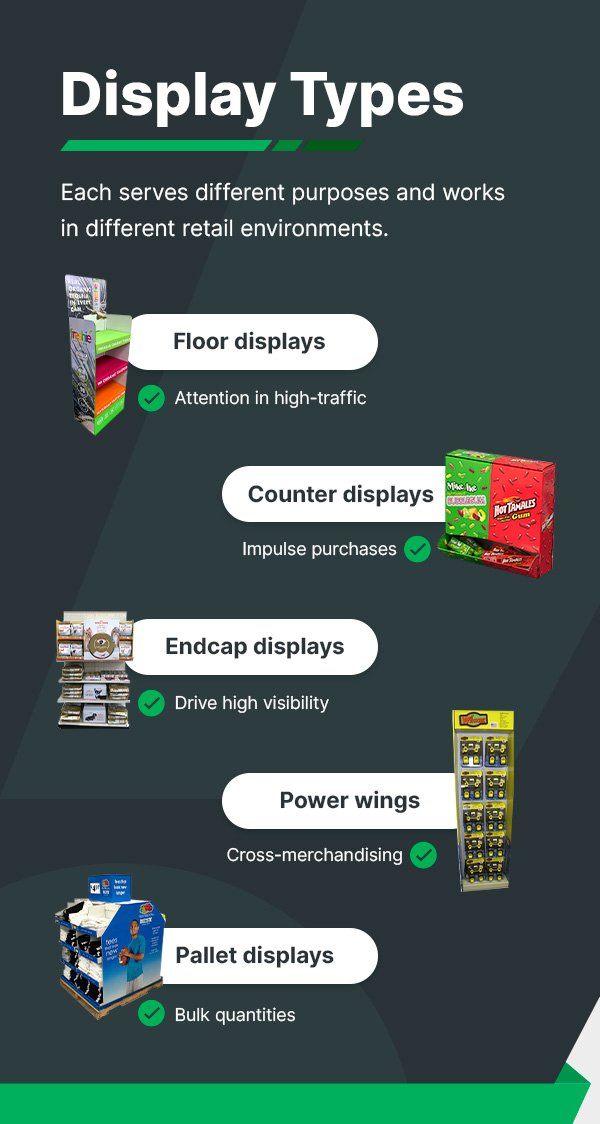
- Floor displays command attention in high-traffic areas and hold larger product quantities, making them ideal for new launches or promotional periods when you need maximum visibility and volume.
- Counter displays capture impulse purchases at checkout or service counters with compact footprints. They’re perfect for smaller items like gum, trial-size products or seasonal offerings.
- Endcap displays drive high visibility at the end of store aisles during promotional periods, offering prime real estate that shoppers pass while navigating the store.
- Power wings attach to existing shelving to add incremental facings without consuming floor space, so they’re excellent for cross-merchandising or supporting items near complementary products.
- Pallet displays accommodate bulk quantities for warehouse clubs or high-volume retailers and are designed to move large amounts of product quickly during promotions or seasonal peaks.
Material choice matters for both function and sustainability. Corrugated cardboard displays are cost-effective, recyclable and ideal for temporary promotions lasting weeks to months. They’re also lightweight and easy to set up, which retailers appreciate. If you have specific structural design considerations or want to explore sustainable display options, include those preferences in your brief.
Specify dimensions, weight capacity and footprint. Retailers have strict space constraints, so you’ll need to know the maximum footprint allowed. Many major retailers publish planogram requirements — reference these in your brief if applicable. Also consider how the display ships and assembles. Retailers favor designs that set up quickly without tools.
Finally, think about any sample elements or special features. Do you need shelves, hooks, literature pockets or sample dispensers? Should the display break down into smaller units for different store formats? Document these requirements clearly, and if you’re unsure about feasibility, note that you’re open to discussing options during the prototyping stage.
Retailer Compliance and Mandatories
Confirming your beautifully designed display meets retailer guidelines before production begins prevents delays and keeps costs on track. Major retailers have strict requirements for display materials, dimensions, labeling and safety features. Some ban certain materials. Others require specific callouts or compliance statements.
If you know which retailers will carry your display, research their requirements and include them in your brief. Many retailers publish vendor guidelines online. Requirements often cover maximum height and footprint, material restrictions, assembly specifications, and mandatory messaging like country of origin or recycling symbols.
Also note any industry-specific regulations. Food and beverage displays may need to meet FDA requirements, while electronics could require specific warnings or certifications. Identifying these mandatory requirements up front prevents expensive redesigns after production begins.
If you’re working with multiple retail chains with conflicting requirements, prioritize which retailers matter most or consider creating display variations. Your manufacturer needs to know these constraints from day one.
Timeline, Budget and Logistics
Be transparent about your timeline and budget from the start. Rushing a project or discovering cost overruns in the middle of production creates stress for everyone. A comprehensive brief should address three critical planning areas:
- Timeline considerations: Specify your in-store date and work backward, including buffer time for unexpected delays or revision rounds. A realistic timeline accounts for design, prototyping, client approvals, production and shipping. If you’re launching regionally before going national, communicate that phased approach. Seasonal campaigns have hard deadlines — Christmas displays that arrive in January are wasted.
- Budget parameters: Provide a realistic range for what you can invest. Display manufacturing costs vary based on materials, size, quantity, print complexity and features. If you’re not sure what’s achievable within your budget, share the number and ask your manufacturer what’s possible. They can suggest ways to maximize impact while controlling costs, whether that means simplifying structures, adjusting quantities or selecting different printing methods.
- Logistics and distribution: Clarify how many displays you need and where they need to go. Will you handle distribution, or does your manufacturer need to ship directly to retail locations or a fulfillment center? Do you need the displays prepacked with product or shipped flat for assembly? These details affect production planning, packaging and shipping costs. The more specific you are about delivery requirements, the more accurately your manufacturer can quote and plan.
Address all three areas in your brief so your manufacturer can provide accurate timelines and pricing from the start. Aligning expectations early ensures smooth production and predictable costs.
What Happens When Your Brief Is Incomplete?
An incomplete brief multiplies costs, erodes timelines and can damage your brand’s reputation with retail partners, often while significantly delaying the project. Understanding what’s at stake makes the case for investing time in a thorough brief up front.
The Hidden Costs of a Vague Brief
When manufacturers have complete information, they can make well-informed decisions and work without delay. Every round of clarification adds days or weeks to your timeline, making up-front thoroughness a significant time-saver. Rush fees to make up lost time can substantially inflate costs.
A detailed brief catches potential issues before prototyping, when changes are simple and cost-effective. Addressing structural considerations from the start avoids the need for new tooling, updated print files and additional approval cycles that compound costs later.
Then there’s the opportunity benefit. Displays that arrive on schedule maximize selling windows. A display ready from day one of a four-week promotion delivers full impact. Seasonal campaigns timed to peak shopping periods deliver the expected ROI, with your product driving sales on the retail floor rather than sitting in the warehouse.
Brand reputation is also valuable to major chains. They typically plan merchandising strategies months in advance. When your display arrives on time and meets their specifications, you’ve strengthened a critical relationship. Suppliers who deliver reliably are remembered, opening doors to future opportunities.
Why a Good Brief Is Your Best Insurance Policy
Think of your brief as a risk mitigation strategy. Every detail you document up front is one less opportunity for miscommunication. When you clearly document objectives, specifications and timelines, there’s no ambiguity about what success looks like. A comprehensive brief aligns everyone — your internal team, the manufacturer and the retailer — on expectations before production begins. If issues arise, you can refer back to the brief to identify where the breakdown occurred and resolve it quickly.
A strong brief also demonstrates professionalism to your retail display manufacturer. It signals that you understand the process and value their expertise. That foundation of respect and clear communication leads to better collaboration and better results. Manufacturers can dive straight into design work, source materials efficiently and keep production on schedule without waiting for answers or second-guessing decisions. The time you invest in writing a thorough brief pays dividends in speed and quality throughout the project.
Envision Your Retail Display With Creative Displays Now
Writing a thorough brief is the first step toward a successful retail display. Partnering with the right manufacturer is the second. Creative Displays Now brings over 60 years of experience in custom corrugated cardboard displays, helping brands across beverage, food, health and beauty, electronics and pet supplies bring their visions to life.
What sets the team apart is their complete in-house process. From structural design and prototyping to prepress, printing and distribution, everything happens under one roof. That means faster turnarounds, tighter quality control and a partner who understands exactly what your brief is asking for. With a 99% on-time delivery rate and G7 Master Certification for print quality, the team has the expertise and reliability to execute even the most complex projects.
Whether you need floor displays, endcap units or custom solutions tailored to specific retailer requirements, Creative Displays Now can help. Ready to get started on your display? Explore our display manufacturing process to see how the team works or check out our success stories for examples of displays that delivered real results.