


 1-866-244-2214
Successful marketing strategies must resonate with your customers, and signage is an excellent way to drive foot traffic, encourage impulse purchases and increase brand awareness. While digital signs can be highly effective in retail environments, there is still a significant need for traditional in-store signage. Understanding the pros and cons of traditional and digital signage lets you choose the tactics that maximize your budget while guiding customers and reinforcing advertising messages. Learn how to calculate the ROI for new signage and what other factors you should consider.
Quick Comparison for Busy Retailers
Traditional and digital signs have different benefits and drawbacks, depending on your products, audience and marketing strategy. Here’s a chart to help you select the better option.
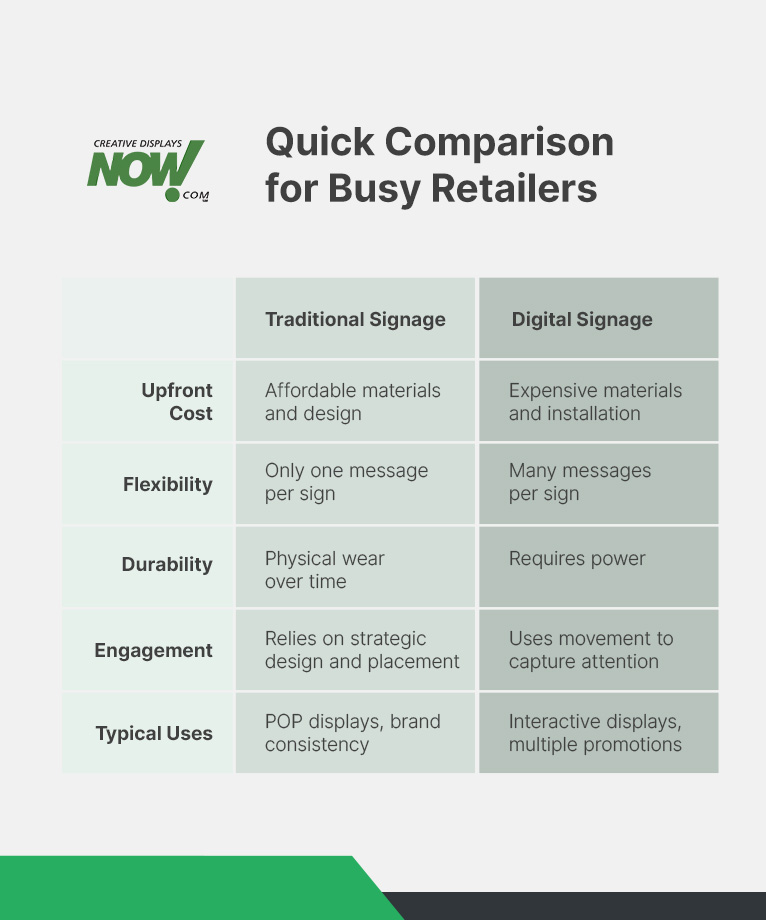
| Traditional Signage | Digital Signage | |
| Upfront Cost | Affordable materials and design | Expensive materials and installation |
| Flexibility | Only one message per sign | Many messages per sign |
| Durability | Physical wear over time | Requires power |
| Engagement | Relies on strategic design and placement | Uses movement to capture attention |
| Typical Uses | POP displays, brand consistency | Interactive displays, multiple promotions |
Traditional formats like corrugated cardboard balance effective engagement and affordable costs. However, digital signs can add an engaging interactive element to your marketing strategy.
Benefits of Traditional Retail Signage
Traditional or static signage is a large-print advertising tool used to display brand messages and advertisements. Cardboard retail displays are a typical example of this approach.
- Hanging ceiling signs: Enticing language, attractive images and aesthetically pleasing color combinations encourage customers to buy.
- Floor signs: These sturdy structures stand independently, often highlighting specific deals and promotions.
- Shelf signs: Strategically placed in high-traffic areas, these signs combine promotional messaging with featured products that influence in-the-moment buying decisions.
Cardboard signs are a valuable way to engage with customers in retail spaces. You’ll see traditional retail signage in displays for products like electronics, pet supplies, beverages and hardware.
Unmatched Cost-Effectiveness for Campaigns
Traditional signage is more affordable than digital options, while allowing for maximum flexibility. For example, you can easily change cardboard point-of-purchase displays for seasonal campaigns, new product launches or to test marketing messages.
Reliability in Any Retail Environment
Cardboard signage is a low-tech, set-it-and-forget-it choice. It will continue to communicate with customers without needing access to the internet or a power outlet. You’ll never need to troubleshoot technical issues or replace batteries. Traditional signs are the epitome of a simple, reliable marketing tool.
Enhancing Visual Merchandising
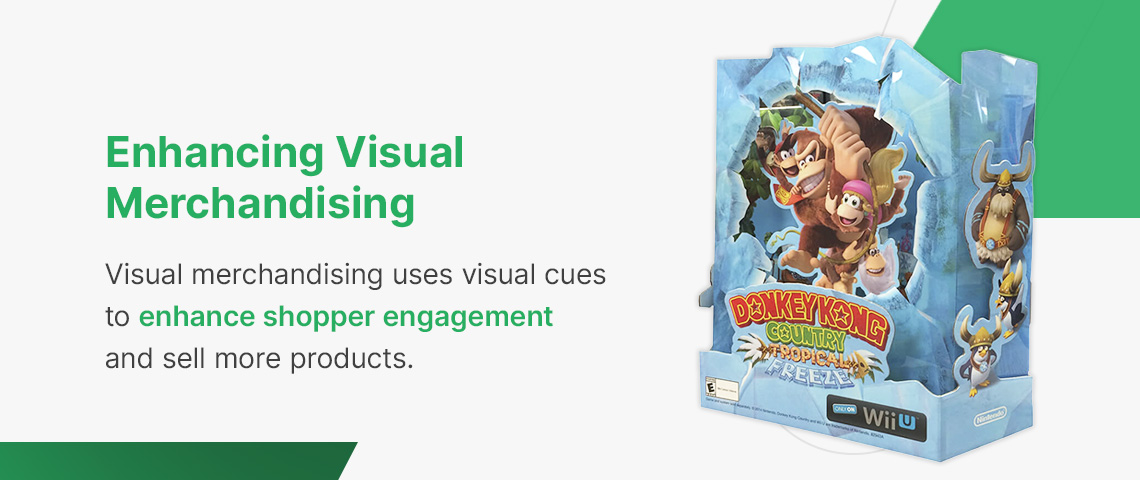
Visual merchandising uses visual cues to enhance shopper engagement and sell more products. Traditional custom-designed displays, like endcaps and floor displays, can integrate physically with products to create an engaging moment for shoppers. Because traditional signs use color and catchy messaging to attract attention, they’re typically bright and creative.
Eco-Friendly and Sustainable Options
Many traditional signs are cardboard, an infinitely recyclable, reusable material. Steel supports inside cardboard displays are also highly recyclable, making traditional signs an eco-friendly way to direct shoppers through your store. Because these materials are so sustainable, you can integrate them into your environmental responsibility initiatives.
Benefits of Digital Signage
Digital signage, or electronic signage, refers to various technologies like video LED walls, projectors, LCD monitors and interactive touch screens. You can find it in public spaces like malls, sports stadiums, corporate offices and restaurants.
Many businesses use digital retail signage to personalize the customer experience. Shoppers can interact with the displays, choose products that suit their needs and get relevant information. You can easily change digital signs to convey timely messages, like announcing lunchtime specials outside a restaurant.
For Dynamic Content and Rapid Updates
Digital signs are an effective way to promote multiple products in one location. For example, you can use a digital sign to show dynamic content like daily specials at a deli or flash sales at a clothing store. This versatility can help you reach more shoppers and spread the word about your products.
Creating an Interactive Customer Experience
Tech like smartphones, tablets and TVs are a constant in shoppers’ daily lives. Integrating digital displays into your business taps into the same visual language that already captures their attention. Motion-based content and dynamic messaging make in-store marketing more compelling, while touch screens are a powerful way to collect customer feedback and track engagement in real time.
4 Factors to Consider When Choosing Signage
Calculating the ROI of signage can help you decide between the value of traditional and digital signage for your brand.
1. Power Supply
Your signage ROI hinges on longevity and effectiveness compared to upfront cost. If you’re considering digital displays, remember they require a reliable power source. Traditional signage delivers in settings with limited electrical access, engaging more customers over its useful life.
2. Location
There’s a direct relationship between placement and longevity. For example, outdoor signage must be hardy enough to withstand weather and temperature fluctuations. While cardboard and steel signs are durable, they won’t last if they get wet. Digital signs may also need special weatherproofing protection if you plan to put them outside.
3. Cost
When evaluating signage costs, consider the upfront investment and long-term maintenance. Traditional signs are budget-friendly and require minimal upkeep. Digital options often come with a higher initial price and ongoing expenses, including repairs, power supply and battery replacements.
4. Your Brand
Consider how your audience will respond to your signs. Switching to digital can be jarring to customers who already engage and interact with traditional displays.
Best Signage for POP Displays
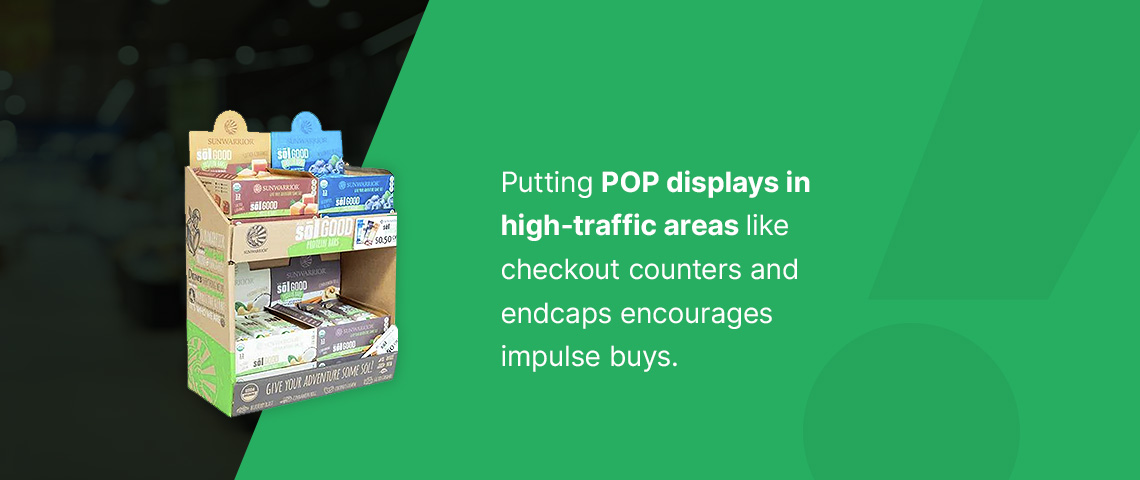
Putting POP displays in high-traffic areas like checkout counters and endcaps encourages impulse buys. When customers are already in buying mode, these strategically positioned displays can prompt them to put an additional item in their cart.
Traditional signage is better for POP displays for several reasons:
- It’s more affordable upfront and in the long run.
- Many traditional retail signs consist of eco-friendly materials like cardboard.
- Creative shapes and bright colors engage shoppers.
- Simple marketing messages are always visible.
- It’s not overstimulating to shoppers — they can engage at their pace.
POP displays often highlight seasonal products, promotions and new arrivals. Traditional signage makes these swaps affordable and simple — no expensive equipment or power source required. That flexibility makes it easier to test new messaging and adapt quickly to changing inventory or customer trends.
A Retailer’s Guide to Calculating Signage ROI
The ROI of your signs will depend on several factors, including the difference between their upfront and long-term costs. Here’s how to calculate these costs to determine the most powerful investment for your brand.
Measuring the Return on Traditional Displays
Traditional displays offer consistent brand visibility and messaging — a reliable way to boost sales and stretch your marketing investment. When paired with strategic placement, creative signage can influence customer behavior and drive measurable results. Use this formula to calculate the ROI:
(Sales Lift – Campaign Cost) / Campaign Cost = ROI
Sales lift refers to the increase in purchases driven by the promotion. You can calculate it by comparing post-promotion sales to baseline sales for the same item. With that number and the cost of your signage, you’ll have a rough ROI estimate.
Placement matters. Try repositioning displays — for example, moving from an aisle endcap to a free-standing location — to see what draws the most attention and delivers the strongest results.
Measuring the Return on Digital Screens
Digital signage provides measurable shopper engagement through touch screens and interactive content. These displays can track how many customers interact with them, giving you hard data to evaluate performance. When paired with product sales, this information helps you calculate the return on your investment.
(Attributed Sales + Engagement Value – Total Cost of Ownership) / Total Cost of Ownership = ROI
Attributed sales are purchases directly linked to the sign’s promotions, while engagement Value reflects non-monetary benefits like dwell time, email sign-ups or other customer actions. You’ll notice that this formula uses “total cost of ownership” instead of “campaign cost.” That’s because digital signage requires continual electricity and maintenance.
Flexibility is an advantage of digital signage. You can rotate multiple promotions on a single screen and even use location-specific promo codes to track sales. While the upfront cost is higher, the ability to gather shopper data and adapt messaging in real time can make digital displays a powerful marketing tool.
Building a Comprehensive Signage Strategy
A comprehensive in-store marketing strategy accounts for multiple elements — budget, goals and target shoppers. Think of signage as a marketing tool that casts a wide net. Either option can be effective when you do your research and use strategic placement.
In some cases, you can merge traditional and digital signage for the highest impact within a reasonable budget. For example, traditional signs shine when you want to increase brand awareness. However, digital screens can be a good fit for high-impact promotions that change frequently.
Get Traditional Signage With Creative Displays Now!

Creative Displays Now! has over 60 years of experience designing and manufacturing custom floor displays. We build traditional signage with durable, affordable and sustainable corrugated cardboard and steel. Whether you’re looking for unique retail signage or product display solutions, our team of professionals can help you create results that wow in retail locations.
Engage shoppers with our cost-effective and high-impact products. When you work with us, we can enhance your marketing efforts and increase ROI through practical solutions. Our signs don’t require additional maintenance and are easy to recycle and replace when the time comes. Request an estimate and learn how we can support your brand!