

 1-866-244-2214
If you’ve dipped your toe into the world of retail displays, you’ve probably heard the terms POS and POP before. These abbreviations, short for point of sale and point of purchase, are often used interchangeably. We’re here to dispel the confusion and explain exactly what sets point-of-sale and point-of-purchase displays apart so you can pick the best one for your needs.
What Are Point-of-Purchase Displays?
Point-of-purchase (POP) displays are structures located where customers are making purchasing decisions. In other words, POP displays are found in a product placement zone, such as a retail entry point, the end of an aisle or the middle of the store. These strategic high-traffic locations aim to influence customer behavior and boost sales.
At a POP location, customers can learn about a current promotion and a product’s unique selling points. They can decide if a product will benefit them and whether they’ll toss it in their cart.
By definition, a point-of-purchase display features a product through special shelving, point-of-sale signage or stands. These displays are versatile and customizable, allowing stores to advertise everything from new toy releases to
What is a Point-of-Sale Display?
Point-of-sale (POS) displays are specialized structures found at the checkout point of a retail location. POS displays allow you to optimize the time customers spend while they are otherwise just standing in line, waiting for their turn to check out. At the point of sale, shoppers have made their decisions and are ready to complete their purchase. Anything else they buy at this point is usually unplanned and done with little thought.
What Is the Difference Between POP and POS Displays?
POS and POP displays both aim to increase impulse buys with convenient and eye-catching displays. Though POP and POS displays promote products and boost revenue, there are a few key differences:
1. Strategic Locations and Designs
While POP displays can benefit from being located in several high-traffic areas around a business, POS displays are positioned where the final sale occurs. Some businesses may incorporate POP and POS displays near checkout areas to maximize selling opportunities, but POS displays will only ever remain at these checkout points.

This difference in placement location also supports different designs. You can think of a POS display as a narrower version of a POP display. POP displays are generally much larger than POS displays and offer significant flexibility in product arrangements. Alternatively, POS displays have a smaller, more compact design to advertise low-weight items that customers might want to grab at the last minute.
2. Product Versatility and Quantity
Given the difference in size and location between the two display types, it makes sense that they would also differ in product versatility and quantity. POP displays usually take up shelving or floor space, while POS displays are often smaller and hold single-packaged items. Think of POP displays as the shelving advertising cases of soda for an upcoming event, while POS displays encourage shoppers to buy a single soda to take on the road.
The larger space availability of POP displays also enables retailers to customize the shelving as they see fit. For example, a seasonal POP display could feature holiday decorations and unique promotions as the seasons change. Alternatively, POS displays typically feature low-weight items, like candy bars or pre-packaged candles. While these items might have some seasonal diversity, such as holiday-themed packaging, the general display offerings will typically remain the same throughout the year.
3. Sparking Customer Interaction
POP displays encourage customers to discover, consider and choose products as part of the shopping journey. These displays may provide product information, offer comparisons or highlight the benefits of a product. The goal is to influence purchase decisions while the customer is still shopping and considering the available options.
POS displays capitalize on the final moments before checkout, prompting quick, often impulsive, add-on purchases. By leveraging low-cost or treat items, POS displays encourage shoppers to grab-and-go before they check out. These displays can also add convenience by offering shoppers last-minute items they may have forgotten about, like chargers or batteries.
What Is the Role of POP in Sales Strategy?
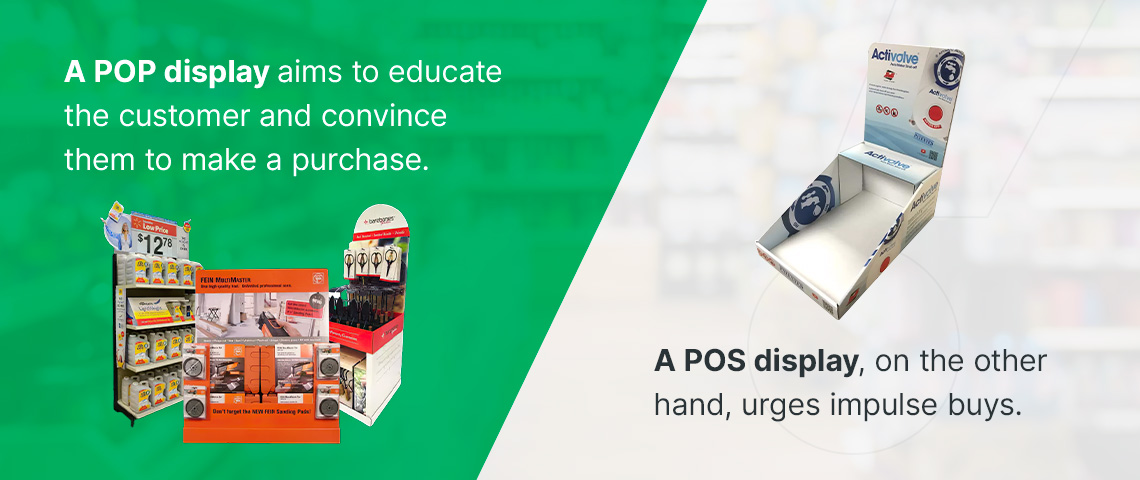
A POP display aims to educate the customer and convince them to make a purchase. They feature enough space to include a brand’s mission, product benefits or company story. They might feature eye-catching graphics and custom shapes. For instance, if you walk into any grocery store, you’ll likely find a colorful, attractive endcap display promoting a new or seasonal product.
Customers are meant to interact with POP displays. They might read the text on the display, pick up the product, look at it closely and decide if it’ll benefit them. POP displays are perfect for spreading brand awareness and promoting a new product or sale.
What Is the Role of POS in Sales Strategy?
A POS display, on the other hand, urges impulse buys. POS displays appeal to a customer’s mood or desire to enjoy something pleasurable. Customers often don’t plan to purchase something near the register, but if an item catches their eye, seems like it’ll serve a need like hunger or thirst, and is reasonably priced, they’re bound to buy.
POS displays often hold gum, candy, magazines, small cosmetic items or toys. Every customer who purchases something in your retail stores will have to pass POS displays during their checkout, which can often allow just enough time to encourage them to leave with a little something extra than they may otherwise have left without.
What Are Common Point-of-Purchase Display Examples?

POP displays come in various sizes, shapes and colors. You can place a POP display in a high-traffic area anywhere in a store. Some examples of POP displays include:
1. Dump Bins
Dump bins are large corrugated cardboard containers that typically go in the middle of an aisle. They’re often used to hold a large quantity of small items. Customers love to rummage through clearance items in a dump bin. Dump bins also make attractive displays for fruits and vegetables.
2. Endcaps
Endcaps are situated at aisle ends. They might be an extension of a gondola and include attached shelving and signage or a freestanding floor display. Endcap displays are one of the largest displays available and are great for advertising beverages, snacks or household cleaning products.
3. Shelf Talkers
Shelf talkers are promotional signs attached to a shelf. They might include a product’s name, brand logo and essential details. Sometimes, they’ll come with tear-off coupons urging customers to try a product.
4. Temporary Displays
Temporary displays are short- to mid-term solutions. These POP displays are great for advertising seasonal products or introducing new products. Retailers can use them to complement other store offerings or promote limited-time discounts and sales.
What Are Some Common Point-of-Sale Display Examples?

POS displays are designed to fit neatly on or near a checkout counter. They’re small but sturdy and pack a big punch. Here are a few examples of corrugated cardboard point-of-sale displays:
1. PDQ Display
PDQ stands for “products displayed quickly.” These displays may come assembled and stocked with products for quick setup. You can place PDQ displays anywhere in a store, but they’re typically used to sell products fast near the cash register.
A corrugated cardboard PDQ display has room on the sides and front for attention-grabbing graphics and key product details.
2. Counter Display
Counter displays are small and light. They’re made for countertops and placing products within easy reach. Counter displays are ideal for holding impulse buys like candy bars, lip gloss or phone chargers. Customers won’t be able to resist noticing your product if it’s in a colorful counter display right in front of them.
3. Gravity Feed Display
A gravity feed display is typically small and includes a sloped shelf. The design allows products to move forward when a customer removes the first one in line. It’s an easy way to create the look of a well-stocked display. Gravity feed displays are excellent for holding candy, gum, smokeless tobacco, beverages and other fast-moving products.
4. Floor Stands
Custom corrugated cardboard floor stands can capture attention through innovative graphics and designs. These displays are excellent for capturing attention and reminding shoppers or common products. These stands are also eye-level and offer easy access, making them the perfect solution for checkout area advertising.
What Are Common Best Practices for POP Displays?
POP displays aim to draw attention and increase sales of products that customers might otherwise overlook. Any time you’ve walked into a store for one item and left with five, you can thank the work of POP marketing. To achieve this goal, POP displays should generally be:
- Useful: Customers are more likely to purchase products that are on their shopping list or a common need they may have forgotten to put on that list. POP displays should be near related products. For example, placing marshmallows near chocolate can remind people of a favorite dessert or comfort drink.
- Novel: POP displays are great for advertising marked-down items, promotions and newly released items. Limited-time sales, seasonal deals or limited stock items can entice shoppers to take advantage of a deal or try something new.
- Eye-catching: Customers should be able to determine what a POP display is advertising without needing to step right up to it. For example, a large shelf of soda in the middle of the aisle is pretty hard to miss. Using bold colors or vibrant lighting can also capture customer attention and make a product stand out from surrounding items.
- Desirable: POP displays should be an easy “yes” for customers. Whether a display offers bundled items, limited-time coupons or free samples, it should make shoppers excited. Retailers may also use testimonials, influencer endorsements or highlight the benefits of a product to make it more desirable.
What Are Common Best Practices for POS Displays?
The effectiveness of POS displays depends on what a store offers and how the products are displayed. These displays should create a seamless and engaging experience that encourages shoppers to make additional purchases. POS displays should be:
- Simple and uncluttered: Cluttered spaces near the register can overwhelm shoppers and discourage purchases. Retailers should focus on minimalist, organized layouts and feature a handful of products. Clean lines and white space can make it easier for customers to scan the items on display and quickly find the product they would most enjoy.
- Highlight low-cost items: POS displays are most effective when they feature “treat yourself” products that require little thought or financial commitment. Items like candy, travel-sized toiletries, batteries or lip balm are perfect because they’re easy to justify as last-minute additions.
- Use bold, clear messaging: Messaging as POS displays should be direct, concise and visually prominent. Large, easy-to-read fonts and high-contrast colors ensure messaging stands out, even in busy checkout areas. Phrases like “Grab and Go” or “Special Offer” create a sense of urgency without cluttering the display with too much text.
- Ensure easy access: These displays should be positioned so that customers can easily see and reach the products without disrupting the checkout flow. Items at eye level or within arm’s reach can support impulse decisions while preventing congestion in the aisle or at the register.
- Encourage add-ons: Retailers can use POS displays to complement common purchases and increase basket size. For example, hand sanitizer, batteries and chargers are great POS items because most people will have a need for them, and the display can act as a gentle nudge to remind shoppers of an item they may otherwise forget.
Are POP or POS Displays Better for Businesses?

With a clear understanding of the difference between point-of-sale and point-of-purchase displays, it’s time to unpack which style best suits your products. The answer generally depends on your objective. Either POS or POP displays might be the right fit if your goal is to:
- Stay versatile: By nature, POP displays offer more flexibility than POS structures. They can be placed throughout a store and range from endcap shelving and large dump bins to eye-level floor structures. You’ll have a wider range of opportunities to mix and match your display strategy throughout a retail location with this type of marketing. POS displays, on the other hand, are more limited in location and scope. However, you can find versatility in product variations. For example, a POS display advertising chewing gum can offer multiple flavors, increasing the chances that more customers will find something they like.
- Gain brand awareness: Focused on garnering some attention for your brand? You can spread POP displays throughout the store for maximum brand awareness potential. However, don’t neglect the importance of a POS display. This high-traffic area means every single customer who makes a purchase will be near your display, raising your odds of getting their attention.
- Increase revenue: At the end of the day, businesses want retail displays that work. The good news? Depending on your product, both POS and POP displays can offer an effective sales strategy. If they are small enough to be promoted near the checkout area, a POS display can lead to higher impulse sales. POP displays will let you take advantage of the full scope and size of a store and maximize your potential to be seen in high-traffic areas.
Many businesses choose to use a combination of POS and POP displays. If you do the same, you can make sure your products are front and center throughout a store — when customers are browsing and buying.
Request an Estimate for Your Custom Product Displays Today
Want more info about POP displays and point-of-sale display design? Read our Beginner’s Guide to POP Displays for more information.
With a clear POP and POS display definition in mind, it’s time to take advantage of both styles for yourself. At Creative Displays Now, we’re excited to help you place your product front and center. We do everything under one roof, from display design to distribution. We also understand popular retailers and their display specifications and requirements.
Reach out to Creative Displays Now to request an estimate for your custom retail POP or POS displays.