

 1-866-244-2214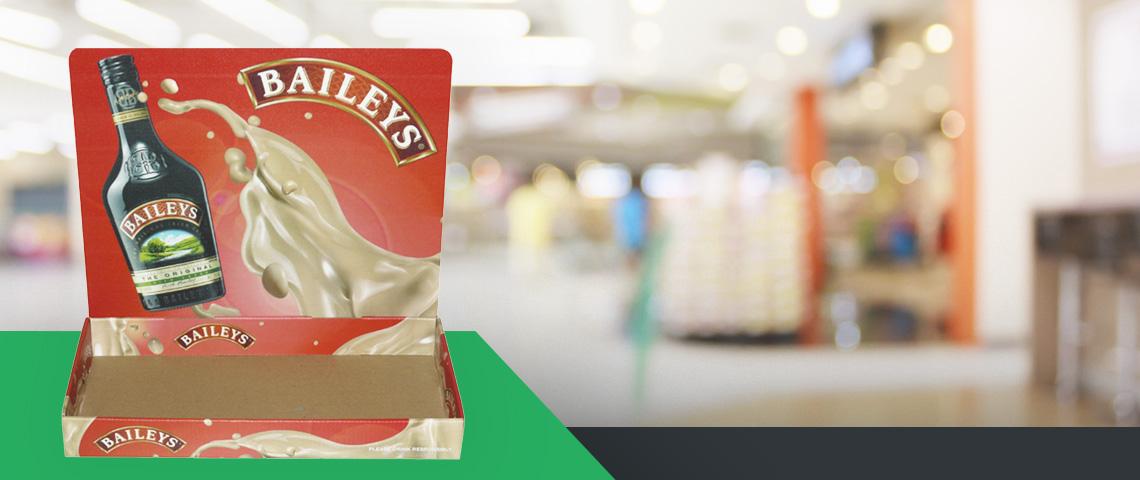
With traditional cases, workers open boxes, remove items and stock shelves one unit at a time. Retail-ready displays skip these time-consuming steps. Instead, the products go directly from the shipping container to the sales floor in one move, reducing unpacking, individual restocking and manual arrangement by store staff.
Understanding how pre-packed shippers deliver exceptional results allows CPG brands to make wiser choices when selecting a display partner.
What Is Retail-Ready Packaging?
Retail-ready packaging, also called shelf-ready packaging, is secondary packaging that moves to the sales floor with minimal handling. Instead of unpacking individual units, store staff open a perforated panel or remove protective wrapping and place the entire display. RRP includes trays, perforated cases and pre-packed shipper displays.
Common Formats
Corrugated cardboard is the dominant material for temporary retail-ready displays. The format includes shelf trays, floor displays, PDQ trays and shipper displays. Each serves different retail environments and product types, but all share the same operational principle — one-step placement from shipping to selling.
Brands that meet retailer standards from the start are better able to design displays that meet retail-ready packaging requirements.
5 Requirements That Make a Display Retail-Ready

Leading retailers use core criteria to evaluate supplier compliance. Research shows that 82% of consumers make in-store buying decisions, so distinctive product presentation can directly impact sales.
1. Clear Labeling and Product Identification
Legibly labeling the product SKU and quantity on the outside of the package reduces handling errors and speeds processing. When store staff and warehouse workers can identify the product without opening it, they can restock it sooner, reducing the window where a product is technically in the store but not available to shoppers.
2. Tool-Free Opening
The easier a display is to open, the faster it will reach the sales floor. A package that’s challenging to open will delay placement and cut into your selling time.
Displays with perforated tear strips, die-cut panels or fold-down fronts require no tools, thus giving you a competitive advantage.
3. One-Move Shelf Replenishment
A qualifying unit should be placeable in a single movement, requiring no individual item stocking, decanting or arranging.
Simpler shelf replenishment allows shoppers to access your products faster and ensures shelves stay reliably stocked between replenishment cycles. That speed can reduce out-of-stock exposure for brands that sell in high-traffic retail environments.
4. Shopper-Friendly Product Access
Shelf positioning and prominent visibility can be the difference between whether a shopper considers or overlooks a product. A well-designed display does the merchandising work for you, turning the entire package into a branded, shopper-facing sales tool.
These stands put products face-forward, with prominent branding and products that are easy to remove without disturbing others.
5. Minimal Waste, Easy Disposal
Corrugated cardboard can accomplish environmental goals at the brand and retailer levels — an increasingly relevant quality, since retailers evaluate suppliers’ sustainability credentials.
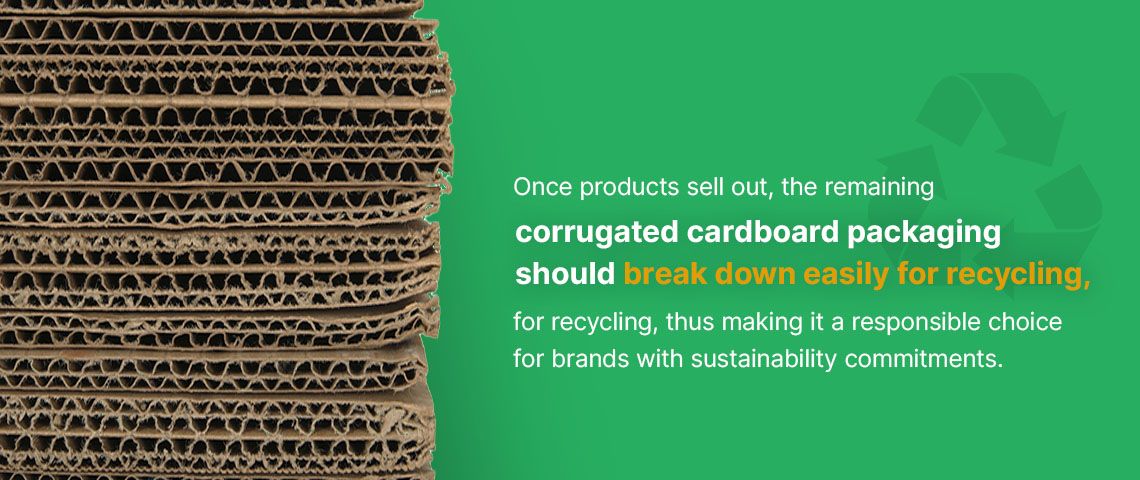
Once products sell out, the remaining corrugated cardboard packaging should break down easily for recycling, thus making it a responsible choice for brands with sustainability commitments.
Why Retailers Prefer Retail-Ready Displays
Retailers increasingly mandate retail-ready displays for specific vendor programs, impacting whether your products reach the sales floor and stay there.
Out-of-Stock Prevention
Out-of-stocks cost the global retail industry $1.2 trillion in 2024. Faster restocking keeps shelves full longer. The CPG industry out-of-stock rate runs at 9% overall and 11% for food and beverage. Top out-of-stock categories, such as sports and energy drinks, frozen baked goods, snacks and carbonated beverages, run 12% to 15% above normal.
Compliance Requirements
Leading retailers, including Walmart, Target and Costco, now require retail-ready packaging compliance from vendors. Each maintains specific guidelines for dimensions, labeling and structural requirements. Noncompliant packaging can result in chargebacks, delayed floor placement or removal from preferred vendor status. Brands that meet these specifications avoid operational delays and maintain stronger vendor standing during category reviews and shelf negotiations.
What Retail-Ready Packaging Does for Your Brand
Retail-ready packaging meets retailers’ requirements while delivering four strategic advantages for brands.
1. Controlling Brand Visibility
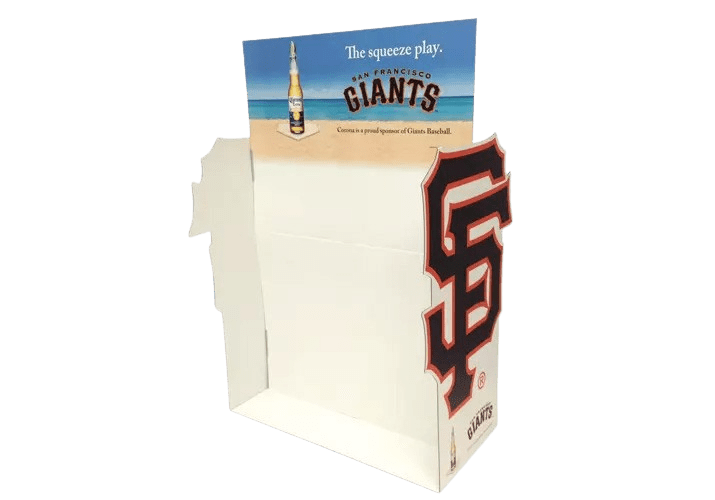
A display represents your brand on store shelves. Full-color printing on corrugated packaging lets you control how shoppers see you, with logos, product imagery, flavor callouts and promotional messages appearing at eye level. A well-designed display captures attention in a crowded aisle, especially valuable during launches and promotions when you want shoppers to spot your brand quickly.
2. Enabling Strategic Merchandising
Retail displays can also support cross-merchandising when a campaign includes complementary products. When you place related items in the same display unit, shoppers will instinctively group them. Examples include pairing a snack with a beverage or grouping seasonal products around the same occasion.
This approach can make the display feel more intentional while increasing the value of each shopper interaction. For brands managing multiple SKUs, cross-merchandising also creates room to feature supporting products that may not earn the same visibility through standard shelf placement alone.
3. Ensuring Consistent Execution
When a display looks professional and fully stocked at one location but appears incomplete or poorly arranged at another, it damages brand perception and reduces purchase intent. Luckily, preconfigured displays make your brand look identical at every retail location, with no variation based on which store associate sets it up.
This convenience eliminates one of the most notorious risks in retail marketing — inconsistent on-shelf presentation that dilutes brand identity and confuses shoppers.
4. Supporting Sustainability Goals
Corrugated displays give brands a sustainability story without requiring a redesign of primary product packaging. The U.S. recycling rate for corrugated cardboard is between 69% and 74%. Most corrugated displays contain recycled content, making them a credible choice when consumers or stakeholders ask about environmental impact.
Corrugated shippers can support retailer sustainability mandates and corporate recyclability targets for brands that prioritize eco-friendliness. Unlike plastic fixtures or mixed-material POP displays, they integrate into existing recycling streams without added complexity.
Cost Considerations and ROI
Pre-packed shipper displays can cost more per unit than standard retail packaging. Campaigns that prioritize timing and consistency often justify this premium. This approach works well for time-sensitive campaigns such as seasonal products, new launches and limited promotions. Meanwhile, flat-pack formats are often more cost-effective for displays that will remain in place for months.
Here are some areas where the cost difference creates a higher return on investment.
- Controlled pack-out: Professional product loading, quality checks and configuration happen at the facility rather than relying on store-level execution.
- Freight: Dimensional weight shipping rates for assembled displays rather than flat-pack rates.
- Up-front production: Investment in structural engineering, graphic design and printing plates for branded displays.
- Faster sell-through: Display units placed immediately in store generate revenue throughout the campaign window.
- Reduced chargebacks: Compliant displays pass inspections with flying colors, while noncompliant retail packaging can trigger penalties, rejected shipments or delays.
- Better inventory management: Predictable placement timing across locations helps brands plan inventory production without building excess safety stock.
What Is a Pre-Packed Shipper Display?
A pre-packed shipper display is a type of retail-ready packaging often designed for floor placement rather than shelf stocking. These corrugated units arrive fully assembled and loaded, functioning as freestanding displays in high-traffic areas like endcaps, checkout zones or seasonal sections. Unlike shelf trays that replace traditional stocking, shipper displays create additional points of sale.
How the Process Works
A brand partners with a display provider who manages structural design, printing, product pack-out and distribution. A finished shipper display moves directly from the production facility to the retail floor — a defining advantage compared with other retail-ready packaging formats.
You’ll collaborate with your chosen vendor on specifications, branding and product configuration. Once you approve, product receipt, quality checks, pack-out and shipping coordination, your partner will oversee these processes. For multilocation launches, one partner handles the entire workflow, reducing vendor management and simplifying logistics.
This integrated model shortens lead times and eliminates the complexity that comes with juggling separate vendors for design, assembly and distribution.
What Display Types Are Available?
Pre-packed shipper displays are available in multiple formats, each suited to different retail environments and promotional goals.
Choosing the appropriate format depends on your product size, campaign duration and where shoppers make purchase decisions. Your display partner can recommend the best fit based on retailer requirements and promotional goals.
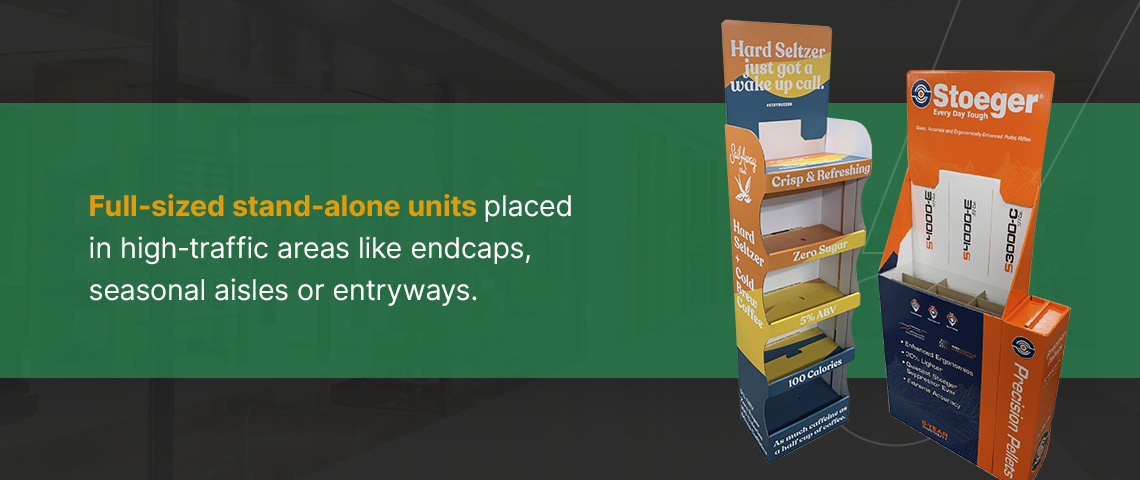
- Floor displays: Full-sized stand-alone units placed in high-traffic areas like endcaps, seasonal aisles or entryways. Best for new launches, promotions or high-volume product drops where maximum visibility drives trial.
- PDQ trays: Compact counter-height units designed for impulse purchases near checkout or service counters. Ideal for smaller products, add-on sales or limited-time offers in convenience stores and grocery chains.
- Counter displays: Small-footprint units for point-of-sale placement where space is tight but shopper attention is more likely, such as gas stations, pharmacies or checkout lanes.
Shipper Displays vs. Stand-Alone Displays
Both formats create floor presence, but they differ in execution. Stand-alone displays require on-site assembly and brand-supplied product. Pre-packed shipper displays arrive ready to place, eliminating setup time and stocking variables.
What Stand-Alone Displays Require
Stand-alone displays ship flat and require on-site assembly. Store staff build the frame, stock the product and position the display. This approach works well for permanent fixtures or long-term programs where displays remain in place for months. Extended use offsets the assembly time with these displays, and lower shipping costs often justify the setup investment.
For short-term promotions or seasonal campaigns, the model requires reliable in-store execution. Success depends on timely assembly, proper configuration and consistent placement across locations.
What Pre-Packed Shippers Deliver
Pre-packed shippers work best in scenarios where timing, consistency and controlled presentation drive campaign success. In each of these situations, your brand controls presentation quality and timing — two variables that directly affect campaign ROI.
- New product launches: Critical launch windows demand immediate, uniform rollout — pre-packed shippers arrive ready to place from Day 1.
- Promotional or seasonal programs: Short selling windows require immediate floor placement without setup delays.
- High-volume rollouts: Simultaneous launches across dozens or hundreds of stores need consistent display configurations at every location.
- Products requiring specific arrangement: Controlled product orientation, facings and stacking order ensure correct presentation when arrangement affects sales performance.
Measuring Display Performance
Tracking retail display performance gives your brand data you can use to prove ROI to internal stakeholders, refine future campaigns and negotiate better placement with retail partners.
Track these metrics.
- Sell-through rate: Shows how quickly products move from the display unit compared to the same SKU on standard shelves. Strong performance often delivers faster turnover with well-placed floor retail displays.
- Reorder velocity: Indicates demand strength based on how frequently retail partners request restocks. Consistent reorder patterns validate display effectiveness and help brands maintain optimal inventory levels without overproduction.
- Placement consistency: Reveals execution quality across multilocation rollouts by comparing performance at stores with similar demographics. Tight clustering may indicate reliable execution.
Checkout-adjacent display units often generate more impulse purchases than mid-aisle spots. Endcap retail displays are also another valuable location.
For pre-packed shippers, performance data tends to be more reliable because execution stays consistent. When every location receives an identical display unit in the same configuration, you can trust that results reflect actual shopper response rather than variable in-store execution quality, making the data more actionable for strategic planning.
How to Prepare for a Retail-Ready Display Program
Having relevant information ready when you contact a display partner streamlines the quoting and design process. The more detail you provide up front, the faster your display partner can deliver accurate quotes and recommend the retail display format that best fits your program goals.
Here’s the information to gather before your first conversation.
- Retailer specifications: Compliance requirements, dimensional limits and any retailer-specific packaging standards for the accounts you’re targeting.
- Product details: Dimensions, weight and fragility level for each SKU included in the display unit.
- Distribution scope: Target store count, geographic regions and whether the rollout happens simultaneously or in phases.
- Campaign timeline: Launch date, promotional window duration and any retailer deadlines that affect production scheduling.
- Brand assets: Logos, product photography, color specifications and any artwork or messaging already approved for the campaign.
- Logistics needs: Product receiving location, shipping coordination method and how the program integrates with existing distribution arrangements.
Get Started With Creative Displays Now

Creative Displays Now handles the full process, from structural design and printing through product pack-out and direct-to-store delivery. With over 60 structural designers and in-house digital, flexo and litho print capabilities, we manage every step under one roof so your displays arrive ready to place.
We work with brands on new product launches, seasonal promotions and multilocation rollouts, designing custom corrugated displays that meet retailer specifications and deliver consistent brand execution. Our ISO 9001:2015 certified process and better-than-99% on-time delivery record are the result of more than six decades in the display and packaging business.
Get in touch today to request an estimate for your next display program.