

 1-866-244-2214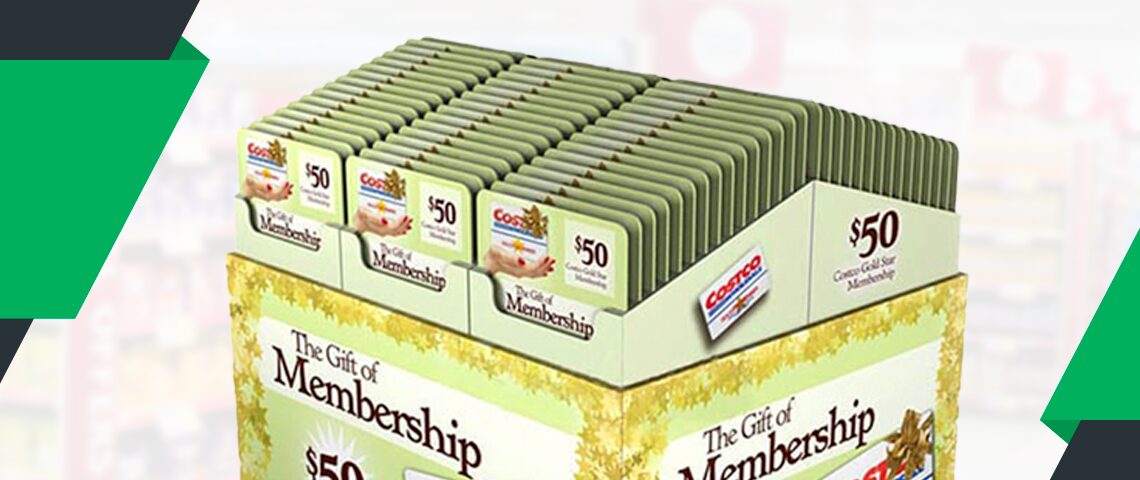
As more aspects of sales go digital, you probably think about how you can stay ahead with marketing techniques and strategies that will work in the modern industry. Physical temporary displays are still beneficial for sales. Keep reading to learn about the value of using temporary vs. digital displays to promote your products.
What Is a Temporary Display?
A temporary display is a short-term branding asset designed to last a few weeks or months. Corrugated cardboard is an ideal material because it is cost-effective, easy to work with and recyclable.
Temporary point-of-purchase displays are good choices for:
- Product launches
- Limited supply runs
- Items that could benefit from increased awareness and sales
Temporary displays can feature bold and flashy designs or timely themes. Brands can refresh them frequently to keep the store environment new and exciting. For example, corrugated cardboard is flexible enough to custom-print with vibrant graphics and die-cut into creative designs that tie into a campaign.
You can pack a temporary display with your products and ship it to retailers as a cohesive unit. Store staff can easily complete the setup when they receive it.
Temporary Display Ideas That Move Inventory
Each display format serves a distinct purpose. Here’s how to use them effectively.
- Seasonal displays make sense for cyclical promotions or new releases. Stores usually group similar products in a designated area, depending on their layout and floor plan.
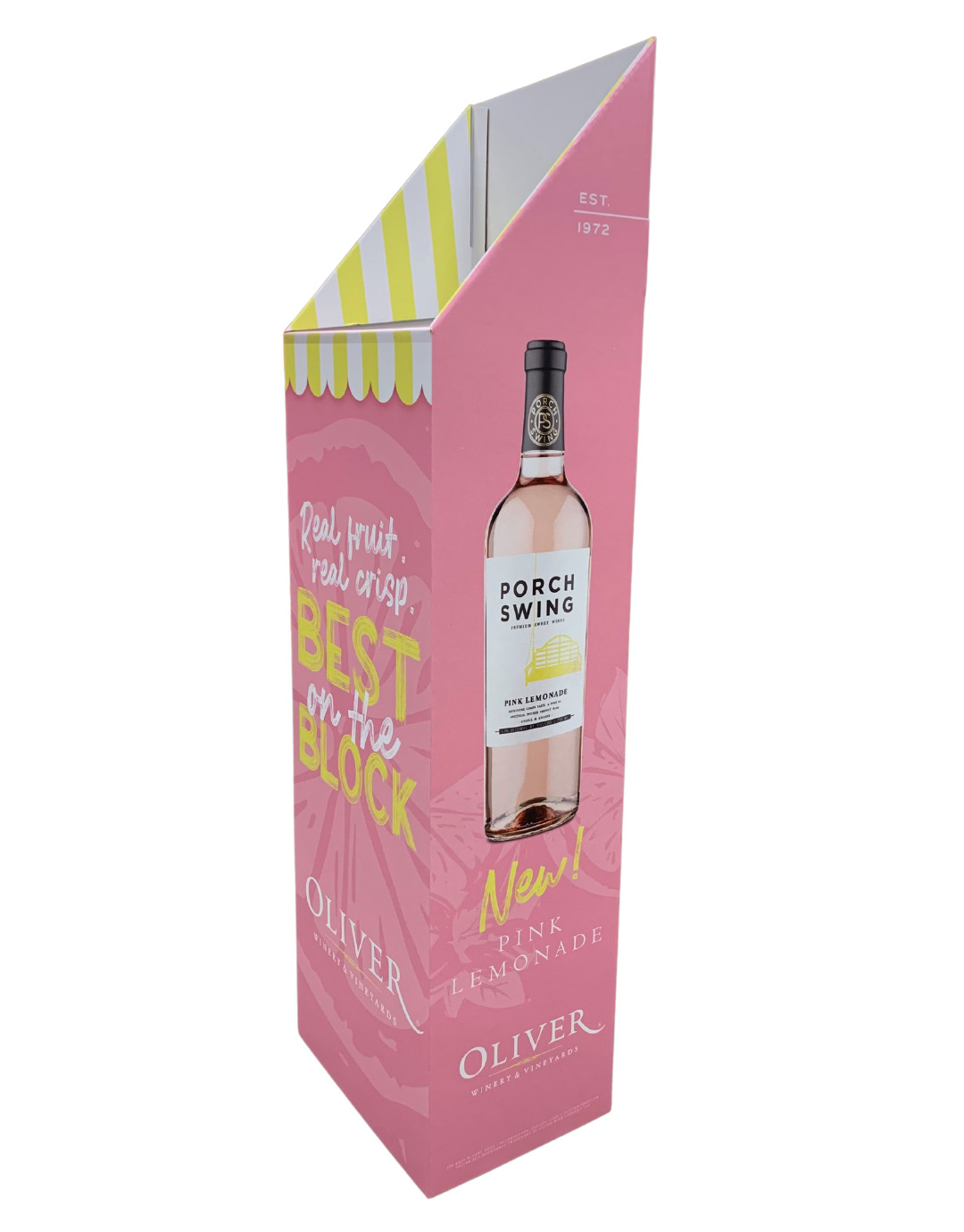
- Counter shipper displays sit on a retail counter or another visible, high-traffic location. These displays double as shipping cartons and presentation units. You can deliver products to the store in printed packaging that converts into a ready-to-use counter display box.
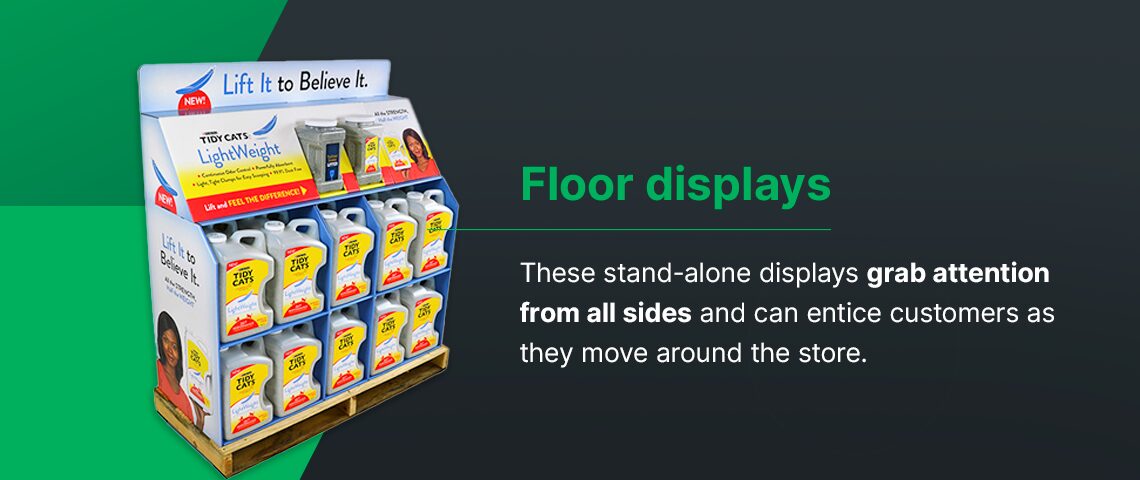
- Floor displays sit on the store floor near a counter or beside a shelf. These stand-alone displays grab attention from all sides and can entice customers as they move around the store.
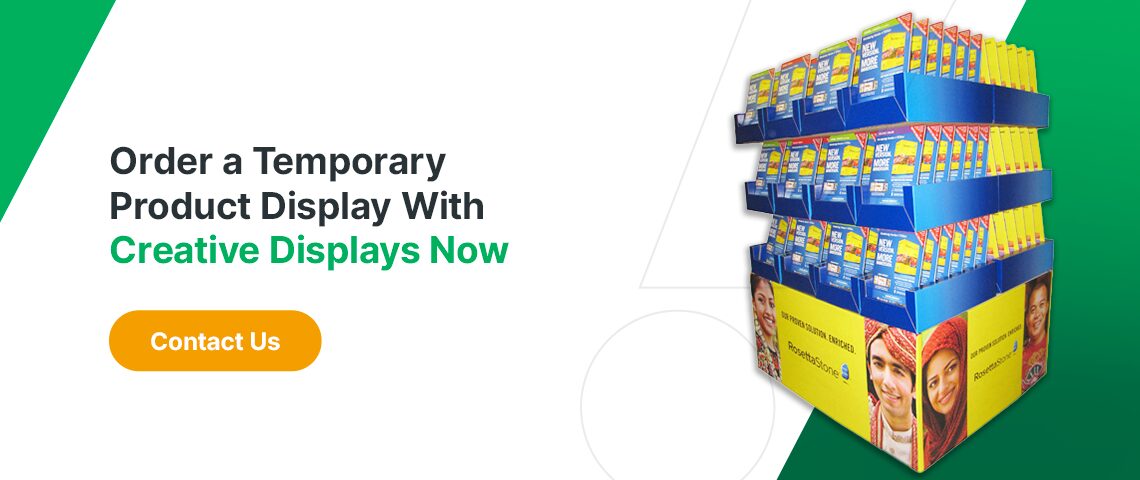
- Pallet displays sit on a shipping pallet and are large enough to stock multiple products at once. They come preassembled for quick setup, and customers can shop pallet displays from all four sides.
What Is a Permanent Display?
A permanent display is a long-term fixture intended to last a year or more, typically made from wood, metal or plastic. It provides an ongoing in-store presence by showcasing your brand’s core product line or year-round offerings. For example, cosmetics sections often feature permanent branded display stands for makeup or perfume. In electronics, permanent fixtures may house a selection of headphones or other gadgets.
Permanent displays work well when they have a timeless design that aligns with your brand’s image. Because they remain in the same location, they can reinforce brand recognition and make a store’s section feel like a dedicated showcase.
Permanent displays can range from end-of-aisle shelving units to freestanding kiosks. Some may incorporate digital components to create an interactive and engaging customer experience.
Differences Between Temporary and Permanent Displays
While short-term and permanent displays are two well-known forms of POP merchandising, they differ in several aspects.
1. Campaign Duration
Temporary displays cater to fast-moving, agile and high-turnover marketing cycles. Meanwhile, permanent displays remain in place for multiyear use, supporting long-term placements for core product lines or consistent brand messaging.
2. Materials
Durable, sustainable corrugated cardboard is an excellent material for temporary displays. They’re lightweight enough for easy transport and setup, yet sturdy enough to hold product weight on busy retail floors.
Permanent displays usually use metal, wood or plastic to make long-term fixtures. These units may incorporate lighting, digital screens or modular components to extend their service life.
3. Cost
Temporary displays are cost-effective, easy to print and have a short production lead. They may be an attractive choice for brands seeking to control costs or those looking to execute various promotions. Due to their budget-friendliness, brands can launch multiple temporary campaigns annually.
Permanent displays require a larger upfront investment. Designing and manufacturing a custom permanent fixture may involve industrial design, tooling for production and complex digital features. These aspects make permanent displays ideal for ongoing exposure to achieve a higher return on investment.
4. Use Cases
Temporary displays are excellent for seasonal products, holiday promotions or limited-time offers. Because they’re simple to produce, set up and remove, they help brands drive urgency and capitalize on shifting market trends.
Permanent displays are suitable for staple items with consistent demand. A strategically placed branded unit reinforces visibility and builds long-term recognition, making it a wise choice for products that sell year-round.
5. Customization and Design Updates
Temporary displays are highly customizable and easy to update. Corrugated cardboard gives you ample flexibility with shapes, colors and graphics. You can tailor a temporary display’s look to match a specific theme, then remove and recycle it once the campaign ends. Many marketers create new designs for every holiday or promotion as their budgets allow.
Permanent displays remain in place for the long haul, so customers may see your initial design and branding choices for years. You must think strategically if you intend your fixture to stay relevant across multiple marketing cycles.
If your budget doesn’t allow for a total redesign, you can make minor updates, like swapping out signage or refreshing digital content. Still, permanent displays are less agile, so savvy marketers plan with longevity in mind.
When to Use a Temporary Display
Temporary displays give brands the flexibility to respond to market trends, align with promotional calendars and capture attention.
- Short-term and seasonal campaigns: Temporary displays are ideal for marketing campaigns with defined time frames. For example, if you want to promote a product that aligns with a specific holiday, you can use a festive temporary display to attract shoppers during that period and take it down afterward.
- New product launches: A branded display can educate customers about a brand-new item and differentiate it from the rest of the shelf. This approach is a low-risk way to test consumer interest because it leaves room for trial and error.
- Budget and speed concerns: Temporary displays are affordable enough to make in-store advertising accessible for smaller, cost-conscious companies. If you need a quick turnaround, you can order a temporary display and have it in place sooner.
- Frequent updates and refreshers: Consider temporary displays to keep the retail experience constantly updated, engaging repeat shoppers. You can rotate promotions monthly or quarterly, using new displays each time.
Is It Time to Invest in a Permanent Display?
Depending on your marketing goals, a permanent display may be an ideal option.
- Showcase evergreen products: If a product is consistently central to your business’s revenue, a permanent display can support continuous sales. Non-season-specific items may necessitate a display that shoppers see every time they visit because your product is always front and center in its category.
- Build long-term brand presence: Permanent displays may enhance brand recognition and create a strong in-store identity. If you want your brand to have a dedicated area or signature look in retail, a permanent fixture does that.
Order a Temporary Product Display With Creative Displays Now
Creative Displays Now helps brands make a lasting impression in stores with temporary displays. We have over 60 years of experience creating custom display and packaging solutions for industries such as beverage, electronics, food and health and beauty. Our team handles every aspect in-house to ensure speed and quality, including design, prototyping, printing, manufacturing and distribution.
Request an estimate today to get started.