

 1-866-244-2214
We’ve all walked into a store and walked out with something we had no intention of buying. Impulse buying is the spontaneous buying of an item without prior planning or intention. Understanding what an impulse purchase is and why retail impulse displays tempt us is essential to drive sales.
What Makes a Customer Impulse Buy Your Product?
Impulse buying is related to internal factors like emotions and external factors like stimuli from the immediate environment. There’s a distinct connection between impulse buying and emotions, so when a customer sees your product, it has to elicit an emotional response that makes them want to buy it. There are many reasons customers impulse buy, such as:
- Feeling like they’re getting a deal: Price-conscious consumers are likely swayed by the concept of not paying full price. They may not have planned to buy an item, but when they see it’s discounted, they feel they must have it.
- Responding to external stimuli: Walking into a store is a sensory experience, and the right combination of background music, the store environment, visual stimuli and the salespeople can subtly encourage customers to purchase.
- Seeking instant gratification: Your customers’ brains are in a constant battle between the desire for instant gratification and prioritizing long-term goals. In short, impulse buying releases dopamine, which makes people feel good. In a retail environment, customers may crave dopamine more than they want to avoid making the purchase.
- Enjoying novelty: If customers see something new and different from what they expect, it can trigger an impulse to purchase.
- Experiencing product placement: Window and point-of-purchase displays can evoke an emotional response that lifts consumers’ moods and results in purchases.
What Is an Impulse Retail Display?
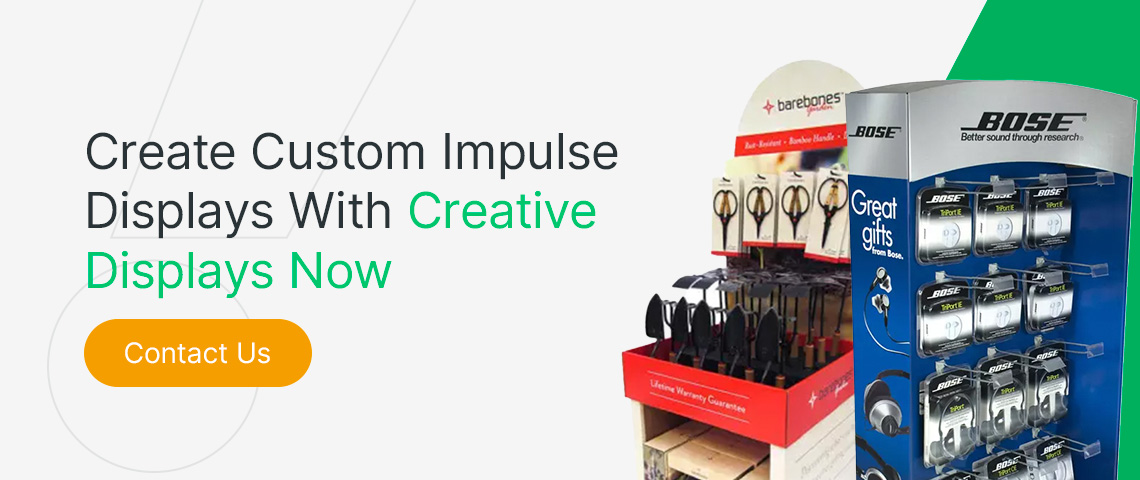
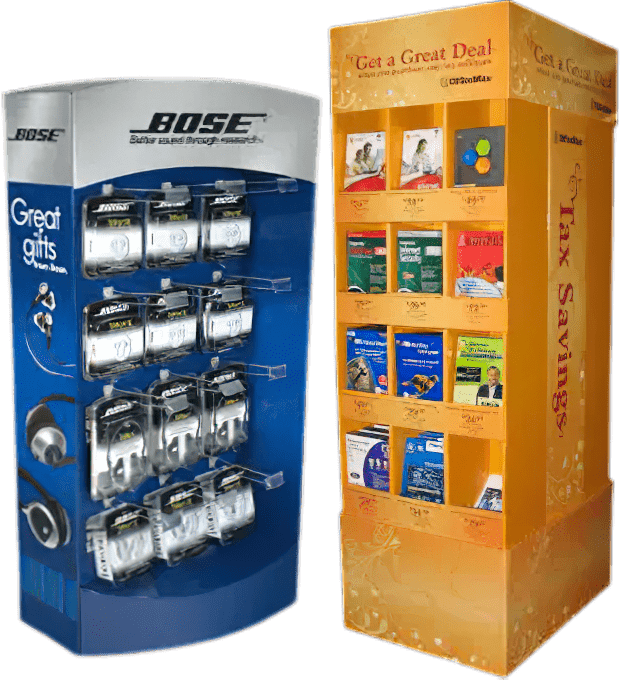
Retail impulse displays are strategically designed visual representations of a product that encourage customers to purchase impulsively. They grab customers’ attention, and when appropriately executed, increase brand awareness, boost sales and drive revenue.
Most impulse buy displays are freestanding and designed by professionals to leverage certain products and promotions. Placing impulse items at checkout — also known as point-of-purchase displays — is an effective strategy for encouraging impulse purchases and creating a positive brand image.
Design Tips for Creating Product Displays for Impulse Buying
Using the right design can result in several purchases of impulse convenience goods. The following tips and tricks form an excellent starting point to create compelling designs and encourage impulse purchases:
1. Think About Location
Location is vital to creating successful impulse displays. Depending on your product and price range, there are several approaches to making sure your products appear in the right places in stores to boost your sales and brand awareness:
- Checkout: Your products should appear near the checkout to leverage the customer’s buying mindset. Placing lower-priced impulse displays near the checkout allows them to make smaller purchases without too much consideration. Also consider placing your products directly at checkout for sale items.
- High-demand items: You can often entice customers to impulse buy by positioning your display near in-demand items they may have come into the store to buy. This method works exceptionally well if the items are complementary, like candles and matches. Although your display isn’t at the checkout, you can still benefit from the traffic high-demand items create.
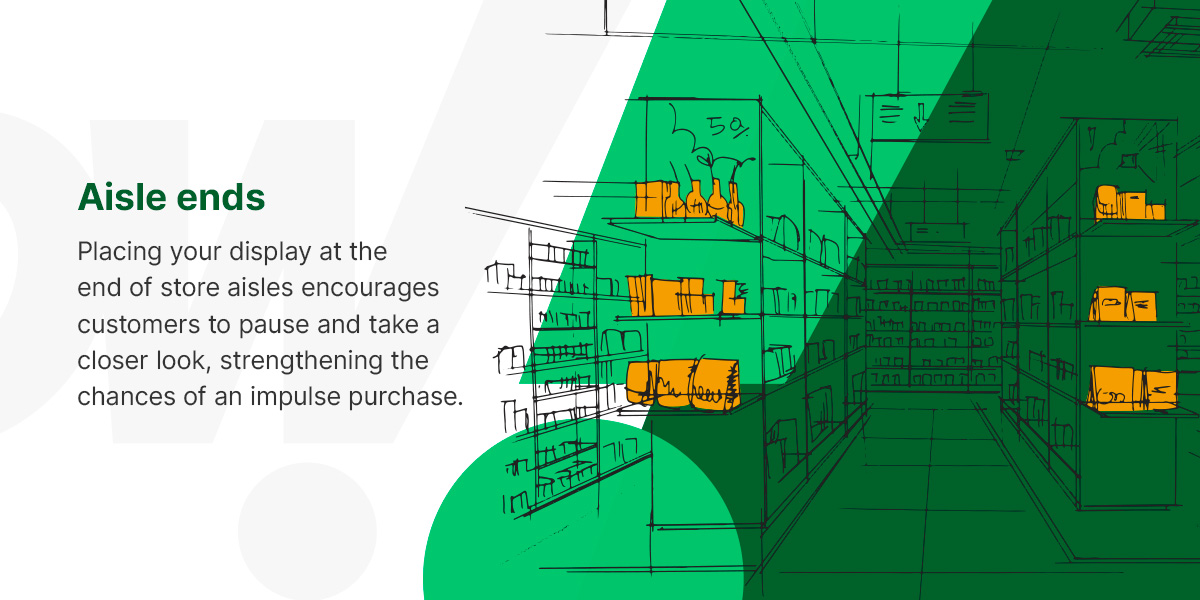
- Aisle ends: Placing your display at the end of store aisles encourages customers to pause and take a closer look, strengthening the chances of an impulse purchase.
- Entrance and exit: The doors in and out of the store have some of the highest traffic, so having a display that draws customers’ eyes as they enter or just before they leave can keep your product at the top of their minds and result in impulse purchases.
- Windows: Your product could be used in part of a well-thought-out, visually appealing window display that draws in passersby.
2. Give Customers a Map
Maximizing the value of your impulse displays involves carefully choosing the right products and placement. Using specific store layouts as a baseline, you can create a map for people to follow in stores, making foot traffic past your high-demand and impulse purchase items more predictable.
Designing a strategic path for customers gives you insights into where customers take their time and when they need a visual break. This information is critical to determine the best placement for impulse displays.
3. Choose the Right Products
Your display and chosen products work together to create the urge to purchase in customers. There are many ways to choose the right products to work with your displays and create impulse purchases, some of which include:
- Seasonal products: Aligning your display with the seasons appeals to people’s emotions. They’re excited to buy travel items during the summer or make a festive connection in the winter. Customers could make emotional purchases if your display resonates with them at a specific time of year.
- Topical products: Matching your products with a current event can have a similar effect to the one described above. Consider matching waterproof gear during heavy rains or your products to specific events and holidays.
- Complementary products: Focusing on products that complement one another, like sunscreen and caps, can prompt customers to make impulse purchases.
- Sale items: Choosing the right products for sale attracts customers looking for a deal.
Pay attention to retail trends and identify popular products that sell fast, as this information can help you make the right product choices for your impulse displays.
4. Match the Type of Display
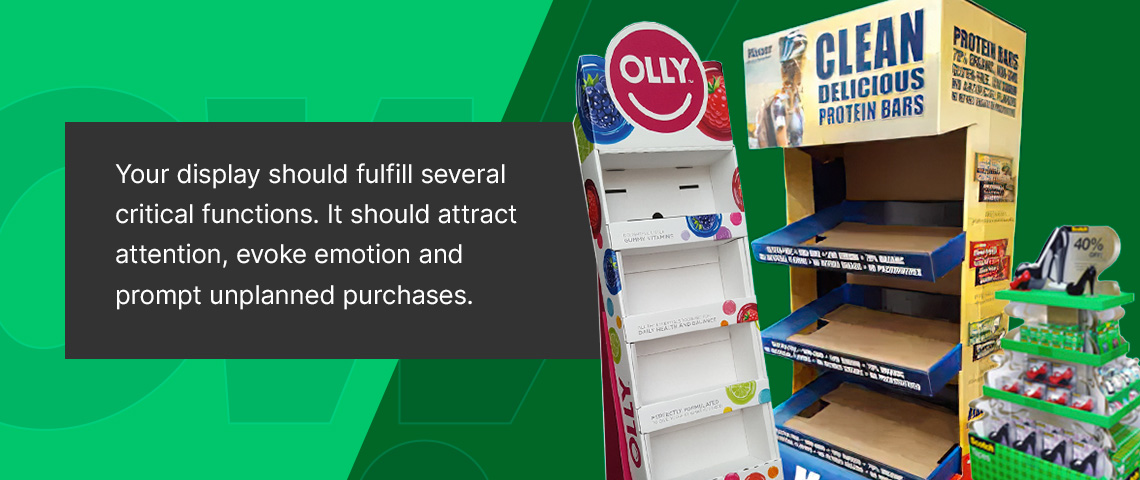
Your display should fulfill several critical functions. It should attract attention, evoke emotion and prompt unplanned purchases. There are many types of displays you can use to show buyers the benefits of your products:
- End-of-aisle displays
- Eye-level displays
- Floor displays
- Point-of-sale displays
- Counter displays
Each type of display here also offers more individual options to suit the type of product you’re selling and the store environment. Larger products may benefit from standing out from the shelves, so you could use a pallet display to grab your customers’ attention and make an impulse buy. In busy retail stores, you can ensure your product beats your competition by carefully using inline displays that fit neatly onto existing shelving units.
5. Consider Branding, Promotion and Customization
Always keep the customers in mind when designing impulse displays. Consider what customers are looking for when they enter a retail store and how you can make your displays more appealing than your competitors’ displays.
One of the most significant benefits of impulse displays is that you can customize them to reflect your brand and meet your customers’ needs. Maintain consistent branding regardless of the store to develop a sense of familiarity with your customers. Impulse displays also occupy prime retail space, which you can leverage for special offers and seasonal offerings to evoke emotion in your customers.
6. Keep It Simple
Clean, simple designs that catch people’s attention are often more successful than busy, complex displays. Your design must make your product the hero of the display, allowing your message to reach customers unencumbered by overly complex graphics.
Think of ways to make your display unique and visually appealing without making it so complicated that customers lose interest.
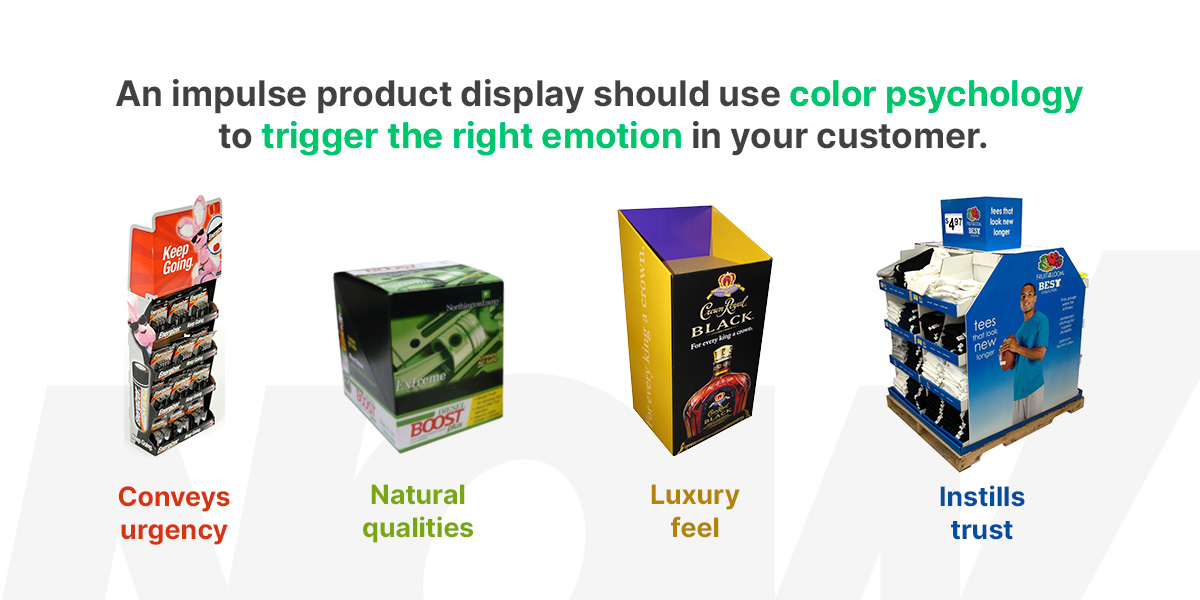
An effective combination of colors and eye-catching images catches customers’ attention straightaway. This happens as part of pattern interruption. Many shoppers are on autopilot as they navigate a store to find what they need. An impulse product display should use color psychology here to trigger the right emotion in your customer, bringing them out of autopilot mode to consider your product. Here are some examples:
- Red conveys urgency.
- Green can connote sustainability and natural qualities.
- Black and gold add a luxury feel to your brand.
- Blue instills trust in your brand.
7. Talk to the Experts
Creating effective impulse displays is strategic. You can avoid ineffective displays by consulting display experts who know what displays work best in different environments, so they can guide you from the design phase and ensure your displays drive sales and brand awareness.
8. Use Sustainable Solutions
Customers are more likely to impulse buy your product when you match their values, including sustainability. By choosing 100% recyclable cardboard product displays made using post-consumer materials, you show your customers that you align with their desire to do their part for the planet.
You may also be able to secure an impulse buy at a higher price point, especially if your product has elements of sustainability in mind. According to one study, 66% of shoppers are prepared to pay more for sustainable products, according to a recent study.
9. Signage
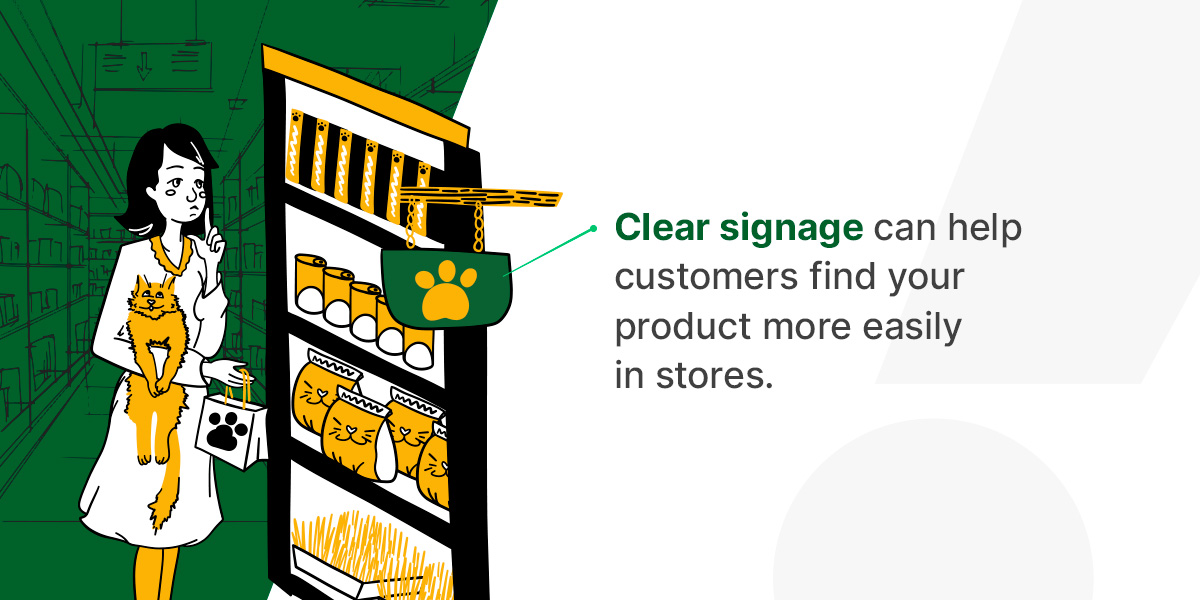
Clear signage can help customers find your product more easily in stores. From floor to ceiling, you can use your messaging to capture your customers’ interest and help them find your product. Use floor, shelf and hanging ceiling signs to warm up your customers and inform them how your product differs from competitors. When customers reach your product, they will already be thinking about your brand, making the impulse buy easier for them.
10. Opt for Custom-Made High Quality Materials
The quality of your impulse buy display must match your products and also the stores you’re selling in. As much as you want your products to stand out, it must be for the right reasons. Integrate your product display into the aesthetics of the store, and ensure it looks professional and well-made to encourage buyers to trust your brand. Check that your product display complies with major retailer shop guidelines.
You can use the same high-grade materials in custom sizes to help you differentiate your products from competitors who may only use stock-sized materials.
11. Rotate Your Impulse Buying Product Display
When customers return to a store, they may be less likely to be influenced by impulse buy displays they are already familiar with. Switch up the products you feature in the displays and change the displays themselves. Corrugated cardboard impulse buy displays offer a balance between durability and cost-effectiveness when rotating regularly. This means your products still have that element of novelty that can trigger an impulse buy.
Create Custom Impulse Displays With Creative Displays Now
Designing impulse retail displays to sell more of your products can be challenging. However, when executed correctly, you can appeal to customers visually and emotionally, encouraging them to purchase your product.
With almost 60 years of experience in the display and packaging business, Creative Displays Now has the expertise of 60 in-house structural designers to help you create effective impulse displays. From design to distribution, all under one roof, we can help you create quality custom impulse displays fast. Our understanding of display specifications for major retailers is instrumental in crafting displays that work for your business and customers.
Contact us today to learn more about creating custom impulse displays for your business.